
A previous order is a useful starting point for a replacement PP divider. Before requesting the same design again, check which drawing and sample were approved, what the divider needs to fit, and whether anything has changed in use.
These checks matter for both a complete replacement grid and individual replacement strips. Similar-looking components can differ in cell opening, height, slot arrangement or assembly direction.
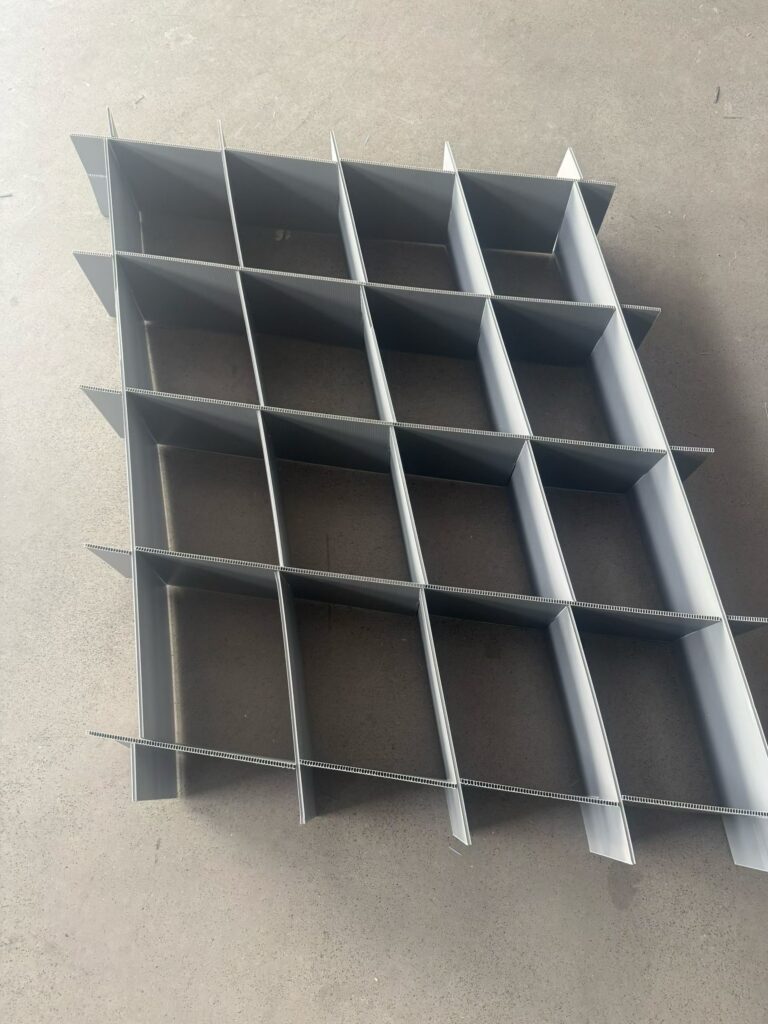
Identify the version you need to replace
Start with the previous order reference, divider identifier and drawing revision. Include the drawing date and units. If you have a physical sample, label it and explain whether it represents the approved design, a later trial or a divider currently in use.
A revised drawing does not establish that an existing sample was made to that revision. Keep the drawing and sample references separate until their relationship has been confirmed. A photograph of the assembled divider can help resolve differences, especially when more than one version is held on site.
If the original drawing is unavailable, state that clearly. Provide measurements and photographs as review inputs, with any estimated dimensions marked as estimates. Do not describe an uncertain version as an exact repeat.
Compare three sets of dimensions
Record the dimensions of the packed part, the assembled divider and the container it fits into. They describe different things:
- Packed part: maximum length, width and height, including any sleeve, bag, cap or other protective material used during loading.
- Divider: clear cell openings, overall assembled dimensions, divider height, and the row and column arrangement.
- Container: usable internal space, including restrictions from corners, ribs, handles, liners, taper and the lid.
Show the measurement direction and units. Slot spacing alone does not establish the clear opening available to the part. An external container dimension also does not establish the space available to the assembled grid.
Use the divider cell measurement guide to organise these measurements. Where an old divider is worn or distorted, identify that condition alongside the measurements so it can be considered during review.
Check individual replacement strips against the assembly
For replacement strips, identify their position in the grid and provide a photo showing how they intersect. Include the strip height, slot locations and assembly direction from the approved drawing, where available.
Do not assume that a strip with a matching overall length will fit the existing assembly. Slot engagement and the resulting cell openings also need checking. If only part of the divider will be replaced, make that scope explicit so the proposed components can be reviewed against the retained assembly.
If compatibility cannot be established from the available records, keep it as an open question for a sample or assembly check before accepting the replacement design.
Record changes since the previous order
Ask whether the part, protective wrapping, container or loading method has changed. A new part revision, a different liner or a revised loading orientation can alter the fit even when the divider drawing stays the same.
Describe the current loading and removal path, surfaces that may be contacted, and areas that need protection. Also record changes to handling, storage or transport conditions. The divider design input checklist covers these inputs in more detail.
Separate confirmed changes from suspected causes. For example, record where a part catches during removal and attach a labelled photograph; leave the cause open if it has not been established.
Confirm what the replacement check covers
When a sample check is needed, identify the drawing revision, sample and assembled arrangement being checked. Record the result, any remaining questions and who will confirm the next step. The packaging sample feedback guide provides a useful structure for that record.
A fit check supports a decision about the arrangement and conditions checked. It does not by itself establish a load rating, transport performance or reuse life. If those requirements have changed, include them as separate review items.
For the reorder request, bring together the previous order reference, intended revision, replacement scope, measured dimensions, loaded-part weight, photographs, known changes, quantity and destination. Mark missing information before requesting a quotation. The divider quotation checklist can help organise the remaining commercial and technical inputs.