
Reusable pallet and product separation
PP Layer Pads for Pallet and Product Separation
Corrugated polypropylene interlayers reviewed against the pallet pattern, usable dimensions, surface contact, edge support, flute direction and the complete handling route.
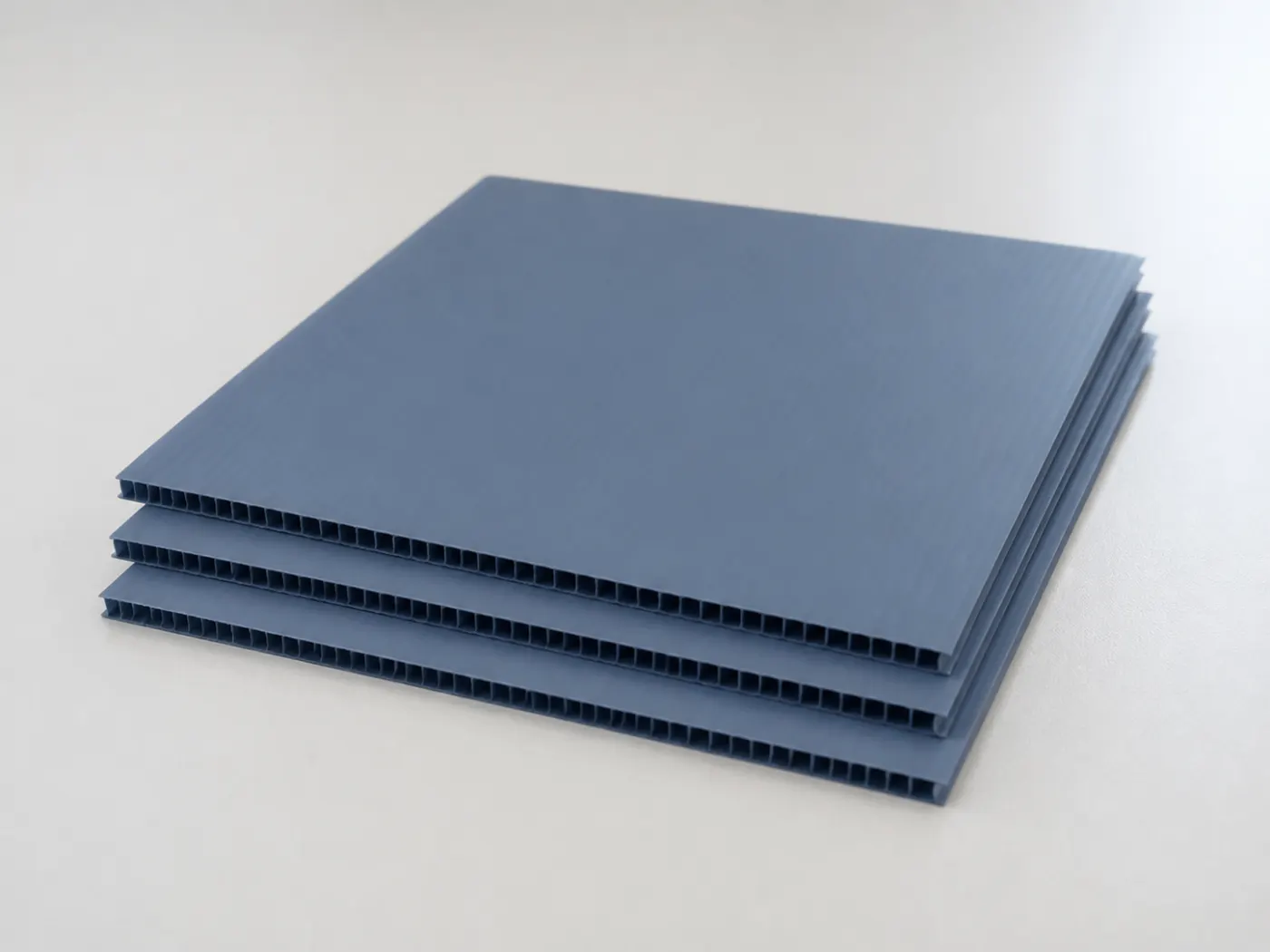
A PP layer pad is a corrugated polypropylene interlayer placed between products or pallet layers. Pad size and thickness alone do not confirm suitability: flute direction, supported area, surface contact, edge condition and the behaviour of the complete load must also be reviewed.
Use-case split
One flat component can perform different packaging tasks
Start from where the pad sits and what it must do in the complete pack.
Pallet interlayer
Separates product rows and interfaces with the pallet pattern during movement and stacking.
Product separator
Creates a defined surface between products where direct contact must be reviewed.
Base or top pad
Forms an interface below or above the load, subject to support and restraint conditions.
Container insert
Fits inside a tote, sleeve or bulk container where usable internal dimensions govern the cut size.
Selection inputs
Specify the load and contact conditions—not only pad dimensions
These inputs reduce assumptions before material, cut size and conversion details are fixed.
For dimensions and quotation inputs, see the layer pad specification guide.
Application context
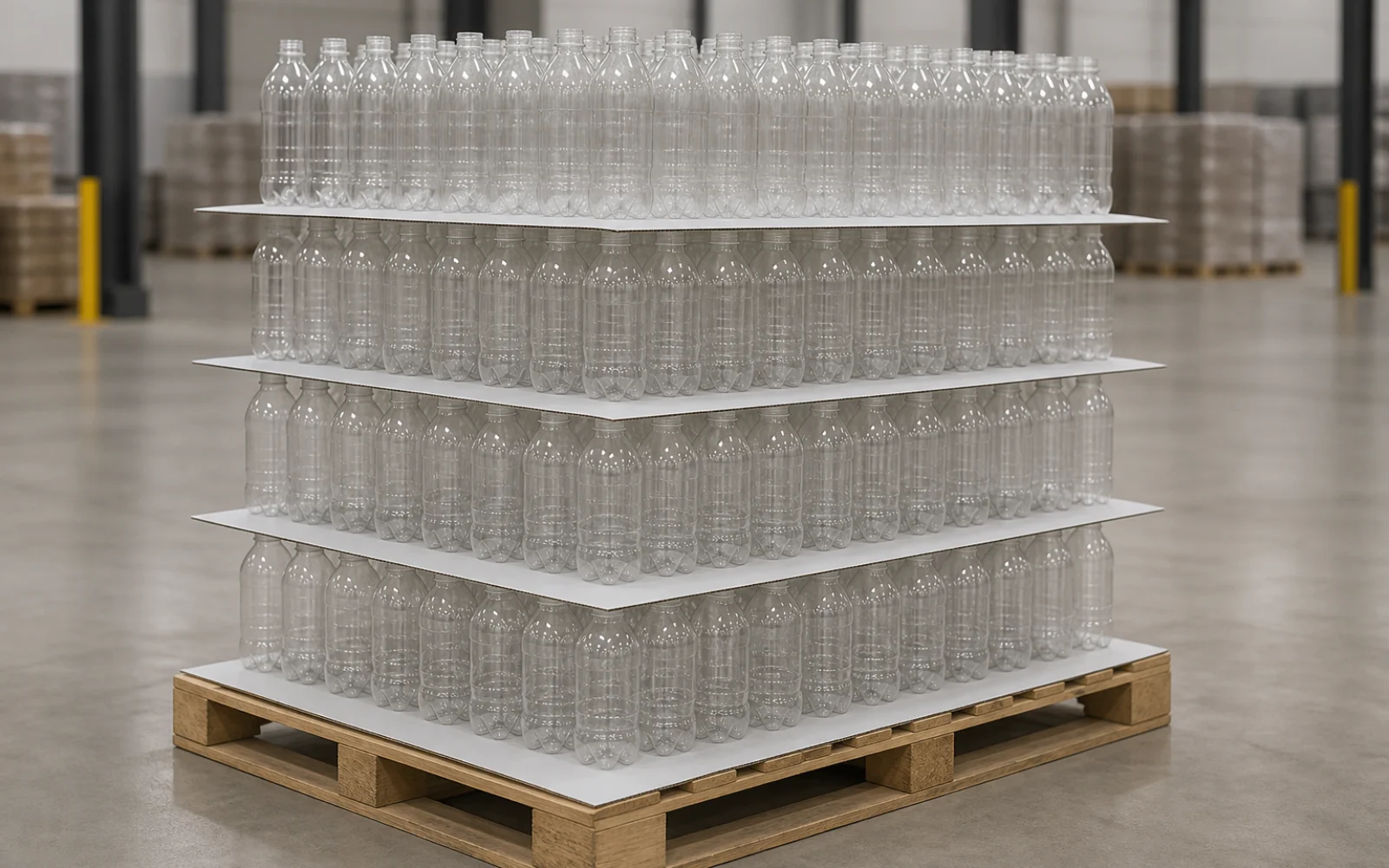
The layer pad works as part of the complete pallet load
A flat sample may look suitable while the assembled load behaves differently. Product footprint, unsupported edges, restraint and movement all affect the review.
Format comparison
Layer pad or divider system?
The choice follows the separation task and how positively each product must be located.
Compare divider systems when each part needs its own cell; see beverage layer pad applications for interlayer examples.
| Decision point | PP layer pad | PP divider system |
|---|---|---|
| Primary role | Separates horizontal product or pallet layers. | Creates defined cells for individual components. |
| Product location | Relies on pallet pattern and the wider restraint system. | Provides lateral separation through intersecting partitions. |
| Key inputs | Load pattern, supported area, pad size, flute direction and edges. | Part envelope, clear cell opening, container ID, slots and loading access. |
| Validation focus | Whole-load support, movement and handling behaviour. | Part fit, cell access, grid assembly and container integration. |
Production and handling
Cut, bundle and deliver against an agreed specification
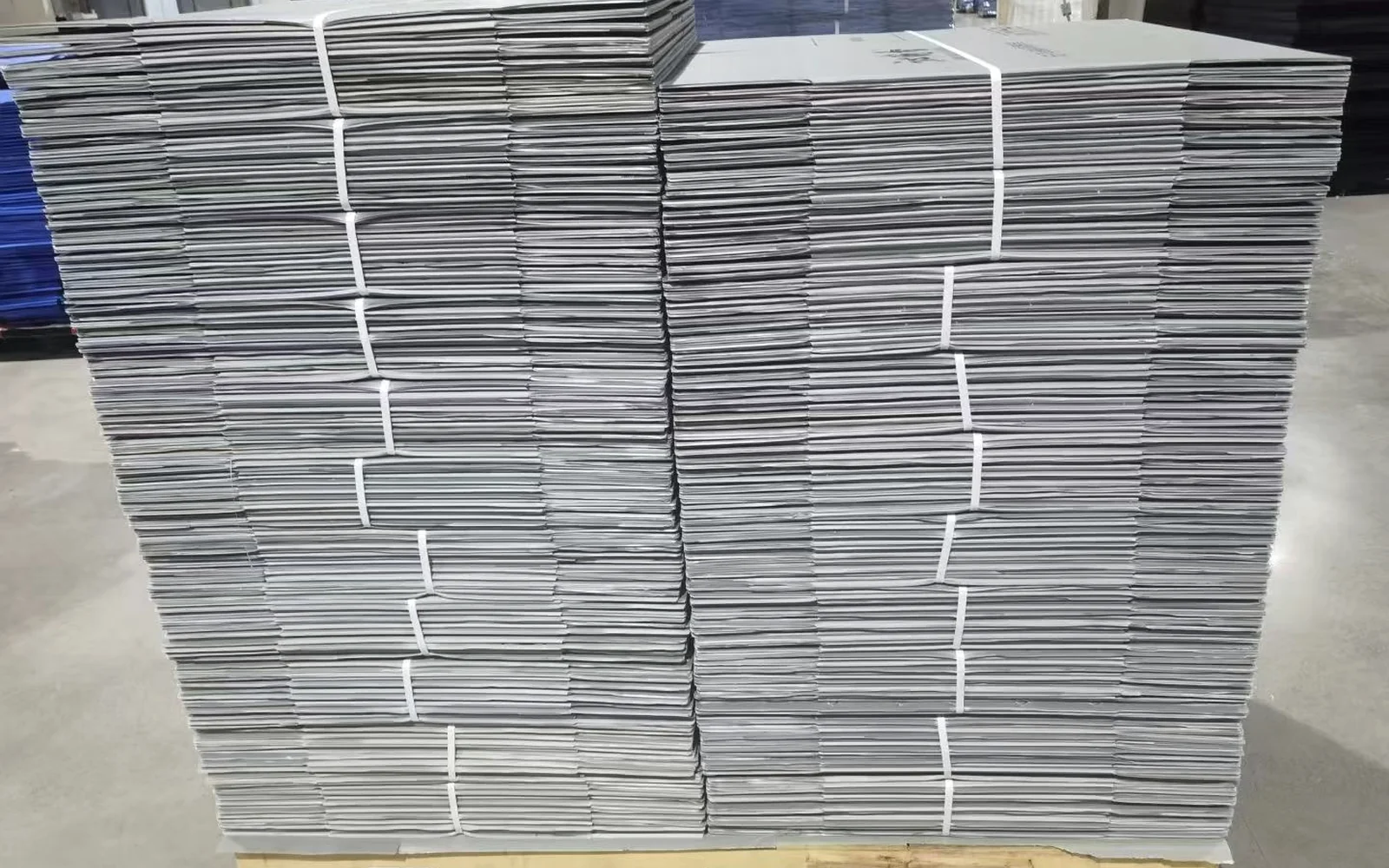
Production quantities should follow the approved dimensions, flute orientation, edge details, markings and packing method. Bundled product photos confirm handling form, not performance in the customer’s final load.
Validation boundary
A pad sample confirms only the reviewed configuration
Sample dimensions and fit do not by themselves prove transport, stacking or repeated-cycle performance. Approval should reference the product pattern, pallet or container, restraint method, pad construction and agreed handling conditions.
Related Guide
Prepare layer-pad specifications
Review size, thickness and handling inputs before sending the requirement for quotation.