
Custom Corrugated PP Dividers for Boxes and Totes
Separate industrial parts into individual cells inside a box or tote with a corrugated PP divider grid. Share your part dimensions, loading orientation and usable internal container dimensions to discuss a configuration.
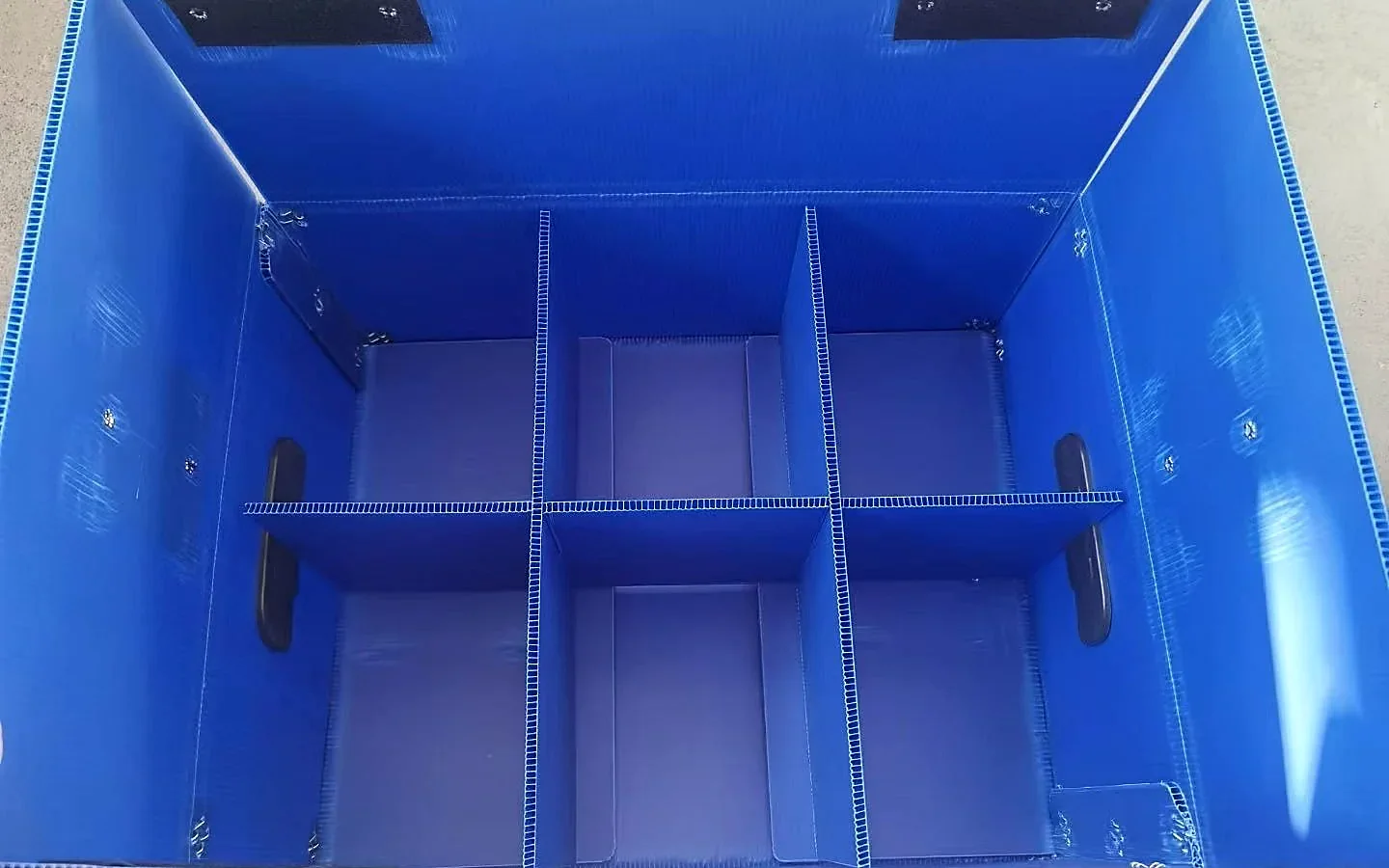
What is a PP divider system?
A PP divider system is an assembly of slotted corrugated polypropylene panels that separates parts into cells inside a box, tote or pallet container. The clear cell opening, contact areas and container fit need to be reviewed together.
Start with the part and its container
Youqian supplies PP divider packaging for automotive metal parts for workstation handling, in-plant storage and transfers between factories. The divider layout needs to be checked against the parts, the container and the handling conditions.
A layout drawing needs to account for how the part enters the cell, where it may contact the divider and how it will be removed.
Can a divider fit an existing box or tote?
Share the usable internal dimensions and photos of the container. Ribs, taper, corners, handles, liners and the lid can reduce the space available for the assembled grid.
Is cell size the same as part size?
No. The clear opening after assembly must account for part tolerances, panel thickness, slot fit and loading access. Nominal part dimensions alone do not establish the final cell size.
What about fragile or finished surfaces?
Identify safe contact areas and areas that must remain clear. Contact arrangements and any lining need project review; a divider grid alone does not establish scratch protection or load support.
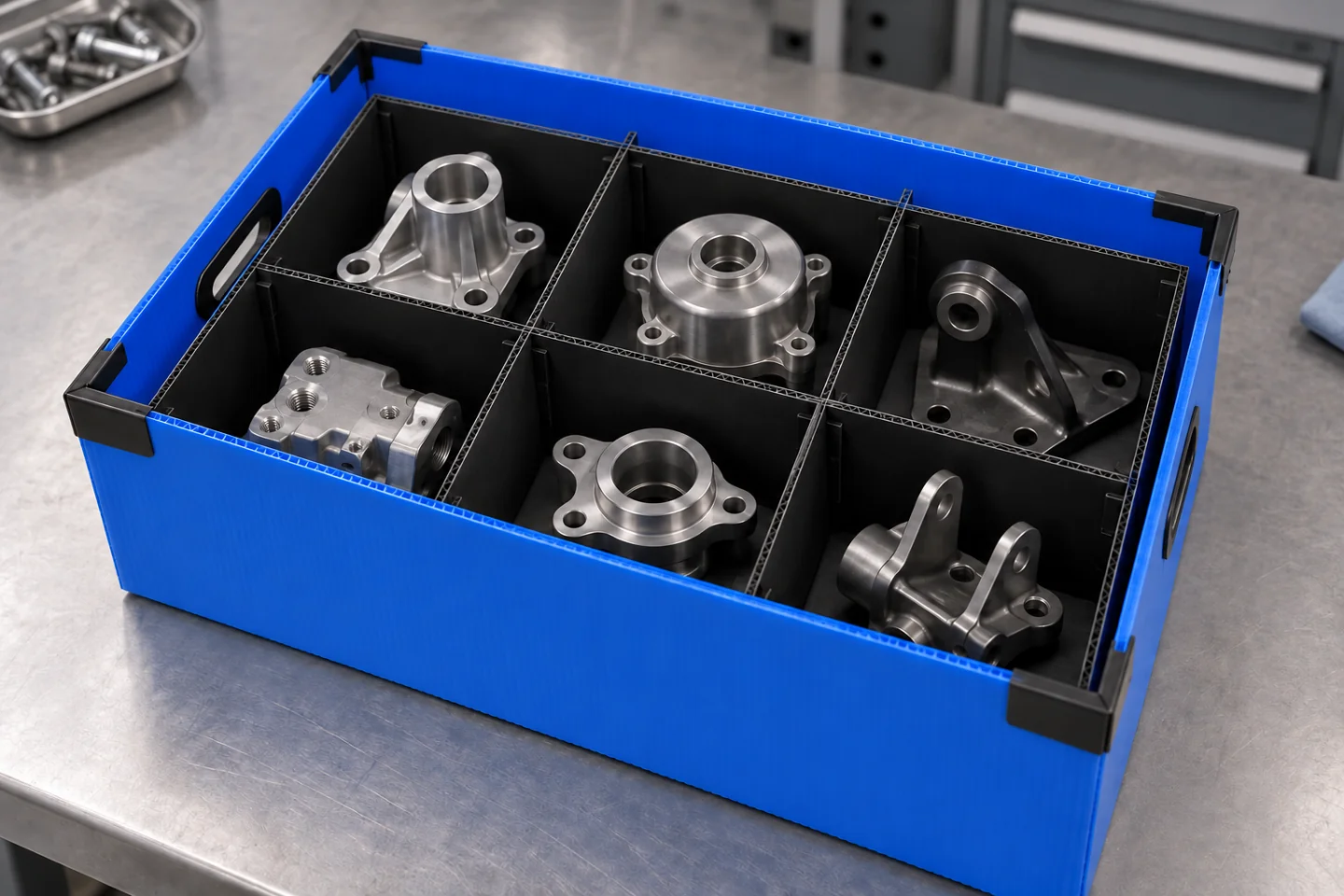
PP dividers for automotive metal parts
For workstation handling, review access for loading and removing each part. For in-plant storage and transfers between factories, confirm the container, loading orientation and handling route before fixing the divider layout.
Share part dimensions, unit weight and surfaces that need to remain clear. Any lining, load support or stacking requirement needs to be checked for the proposed configuration.
What information is needed for a PP divider enquiry?
Send the information you have. Mark estimates and missing values clearly so that review starts from the known requirements.
| Design input | Information to share |
|---|---|
| Overall divider size | Proposed length, width and height, if known. Distinguish the assembled divider dimensions from the container dimensions. |
| Clear cell opening | Required usable opening, or proposed rows, columns and divider height. Confirm the opening after assembly rather than treating a nominal grid dimension as the clear space. |
| Part details | Part dimensions, tolerances, orientation and unit weight. Show safe contact areas, protrusions and surfaces that need to remain clear. |
| Container details | Usable internal dimensions and relevant ribs, taper, handles, base and lid. Photos or drawings help identify constraints. |
| Handling conditions | Loading and unloading direction, lifting, storage, transport and empty return. Include stacking conditions where relevant to the project. |
| Structure and assembly | How the grid will be installed or removed, with a reference photo or drawing if available. Identify any base or lining arrangement for review. |
| Quantity and unit | Required quantity and whether it means individual pieces, complete divider sets or packed boxes. |
| Delivery destination | Destination country and city for the commercial and delivery review. |
Engineering boundary: receiving these inputs starts the review. It does not establish final fit, manufacturability, performance, price or lead time.
Slotted PP panels assembled into a divider grid
Panel thickness, flute direction, slot dimensions and divider height affect the assembled layout. Review the grid with the container and its base arrangement.
The grid and container work together
Review usable internal space, loading access and the base or lid before fixing the layout. For the surrounding container, see PP corrugated box options.

Converted divider panels
Review panel and slot details against the agreed construction, then confirm assembly and loading access with the intended parts and container.
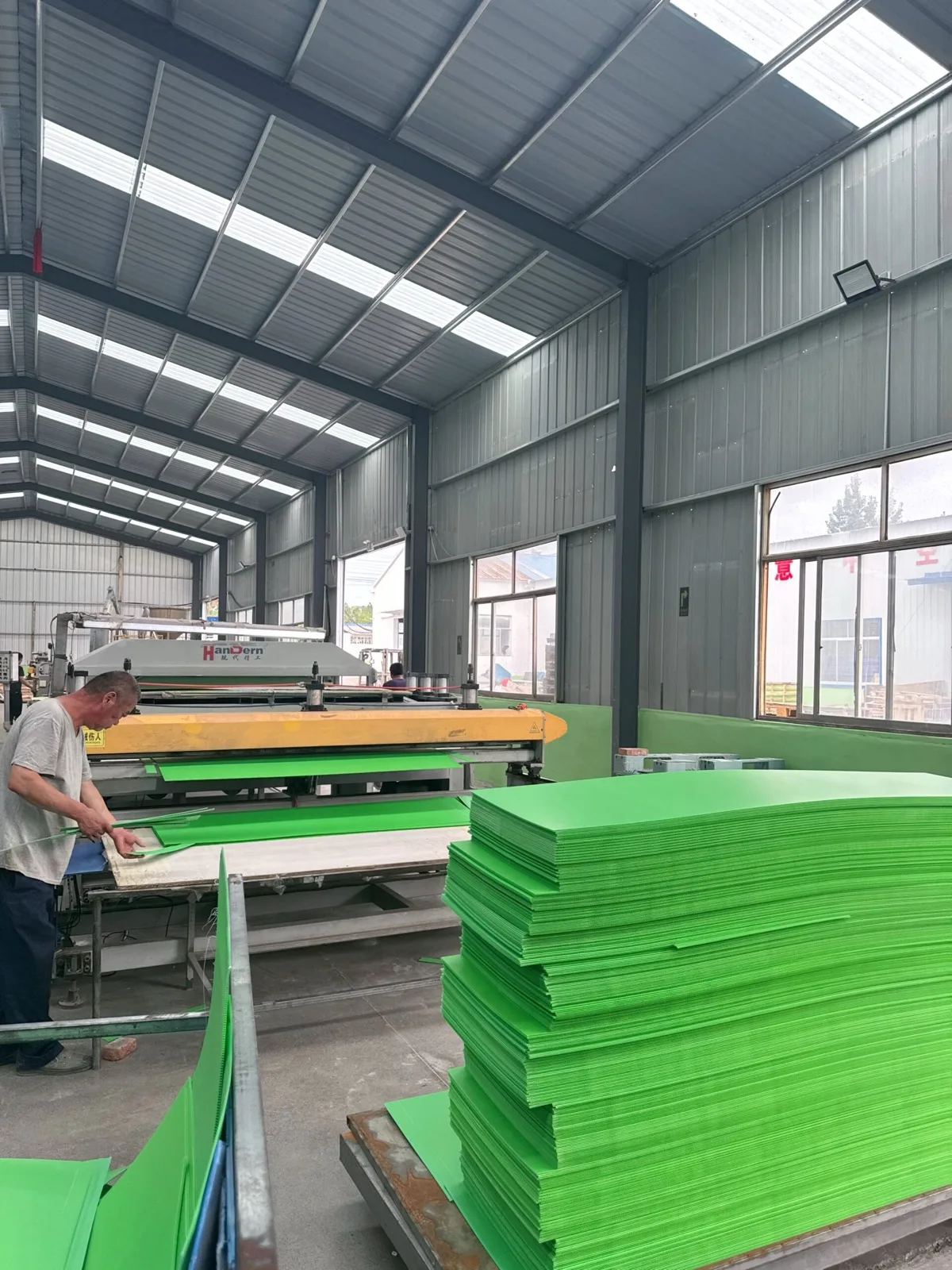
From design inputs to an agreed specification
- Requirement reviewIdentify known part, container and handling information. Keep unconfirmed values visible.
- Concept and drawingReview the proposed cell layout, contact areas, container fit and assembly method.
- Representative sample fitCheck loading, removal and interference using the intended parts and container.
- Agreed validationDefine the relevant use conditions and acceptance checks before production release.
MOQ and samples
Confirm the specification, trial quantity and sample costs
MOQ is confirmed for each specification. Small trial orders can be assessed; acceptance and quantity depend on the dimensions, material, thickness or grammage, color, grid structure and conversion requirements. We offer complete divider sets and boxes with dividers, with each option quoted separately. Divider quantities are quoted in complete sets by default. One set includes all divider panels needed to form the grid inside one box.
Small samples of available stock material are free. Their form is confirmed for each request based on your needs and the available material. Custom samples are charged and quoted before production; tooling, printing, special materials and testing may involve separate costs. The customer pays sample shipping, through a usable courier account or by prepaying the agreed freight charge.
To start, send the intended use, dimensions or a photo of the current packaging, and the trial quantity. We can clarify the remaining details with you. Material samples help you review the material; full-size fit, load performance and handling still need to be checked for the intended application.
Common questions about a divider project
Does a sample fit confirm transport or stacking performance?
No. A sample fit checks the tested parts, container and layout. It does not by itself establish performance during transport, stacking or repeated return cycles. Agree the relevant validation conditions separately.
Can the divider grid support the part weight?
Do not assume that the grid provides load support. Review unit weight, contact positions and the base and container arrangement. Any support requirement needs confirmation for the intended configuration and handling route.
Can I enquire before all dimensions are confirmed?
Yes. Send the available drawing, container photo or part information and identify what is still unknown. The missing inputs can then be listed for review. Estimates remain provisional until confirmed.
Related Guide
Define divider cell size
Use the guide to prepare part, clearance and cell inputs before requesting a project quote.