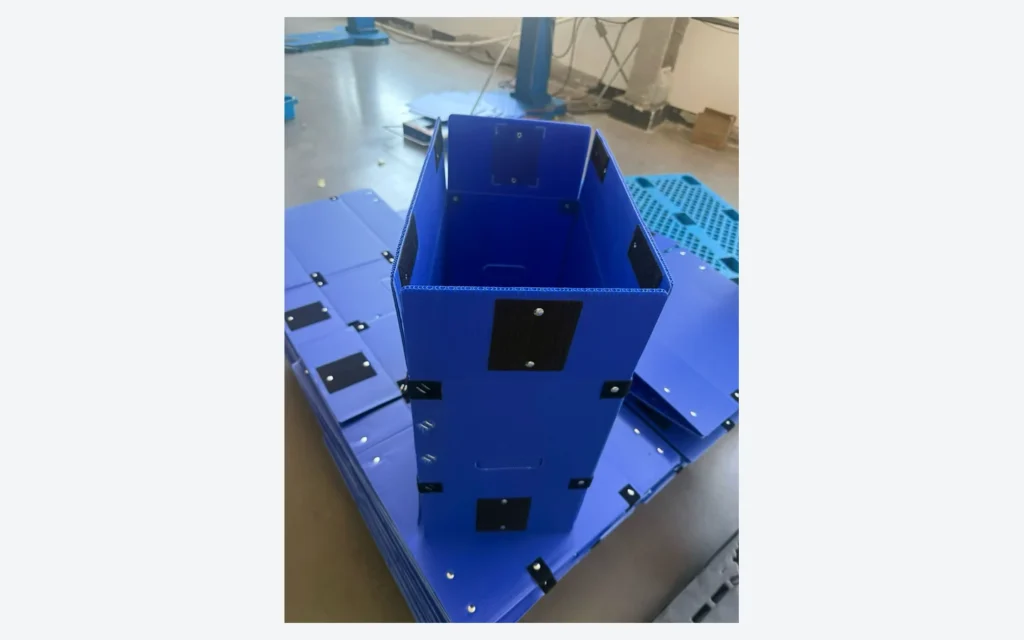
PP corrugated box internal dimensions describe the usable space for the packed product. External dimensions describe the assembled outside envelope. Label each set separately and state whether lids, dividers and other fittings are included.
Internal and external dimensions answer different questions
Use internal dimensions to check product and insert fit. Use external dimensions to check pallet positions, shelves and handling equipment. A single unlabelled length × width × height leaves the supplier guessing which requirement you mean.
Seams, folded panels, joints, reinforcement and lids affect the relationship between the two. Subtracting a nominal sheet thickness from an outside measurement does not establish the usable space in the finished box.
Measure the box in its intended assembled condition
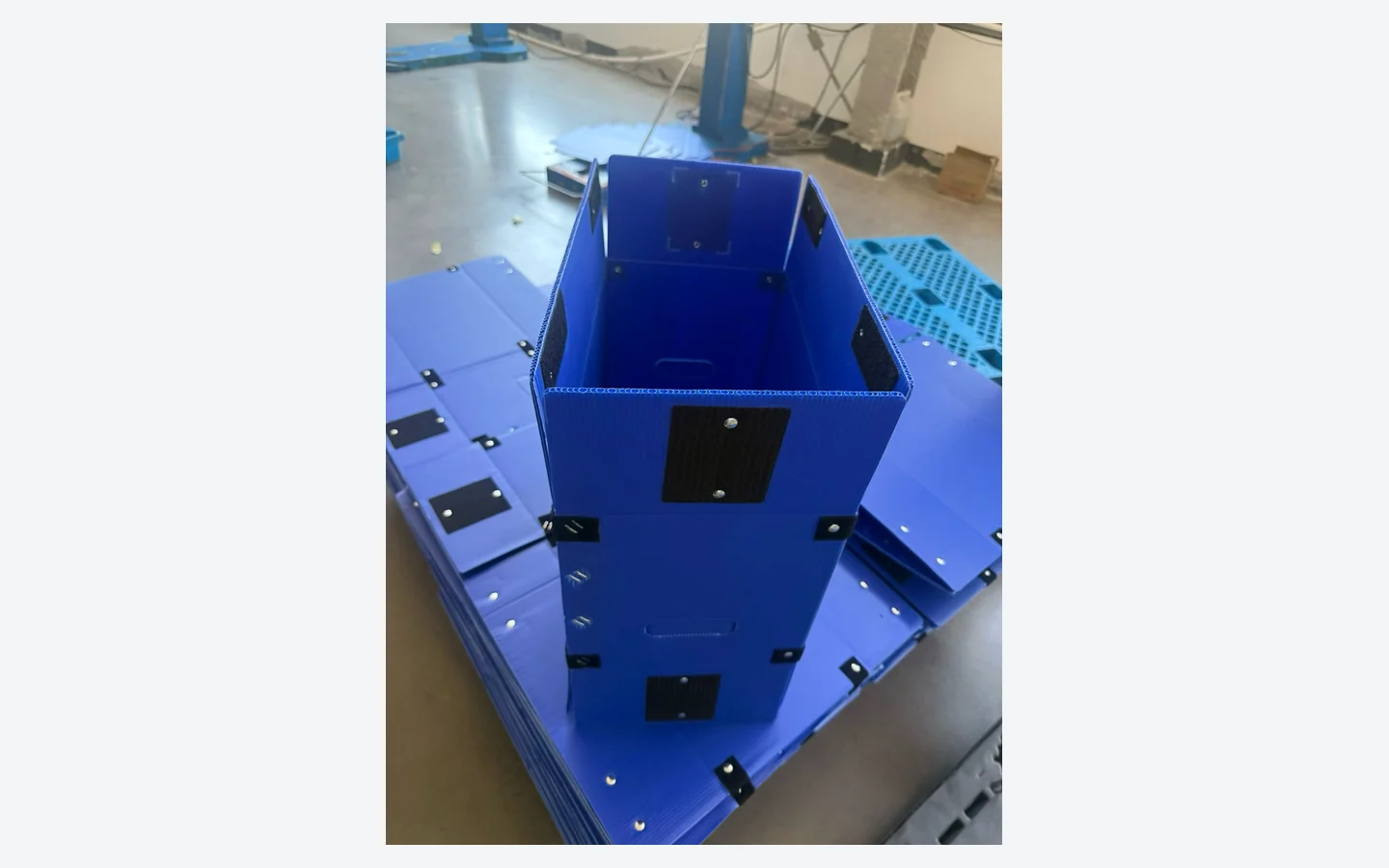
For a foldable box, distinguish the opened box from the collapsed pack and the flat component before assembly. Flat-panel dimensions are production information; they do not describe the space available to the product.
Show whether the lid is fitted, closures are engaged and dividers or liners are installed. If the box has a top frame or projecting handles, include them when checking the outside envelope against a fixed opening.
Label the measurement points and units
Mark length and width directions on a sketch rather than relying on a naming convention. Use the same directions for the part, box and pallet layout, and write the unit beside the dimensions.
| Measurement | What to identify |
|---|---|
| Internal length and width | The clear space available to the packed product at the relevant height, including any local restriction. |
| Usable internal height | From the inside support surface to the limiting surface above the product, with the intended lid and packing fitted. |
| External length and width | The maximum assembled outside envelope, including fittings that affect the intended fit. |
| External height | From the lowest outside point to the highest outside point in the stated assembled condition. |
| Collapsed or flat size | Label separately, stating whether this is a folded finished box or a component before assembly. |
Account for the product and everything around it
Measure the product in its loading orientation, including caps, bags, sleeves and protective wrap. For several parts, show the intended rows, columns or layers. Mark protrusions and surfaces that must not rub against the packaging.
Dividers, perimeter supports, pads, seams and closures can restrict usable space. Where that restriction occurs matters: a clear measurement near the top may not describe the room available at a reinforced corner or at the base.
Send the box and insert arrangement together. The divider cell-size guide explains the difference between the part size, clear cell opening and complete insert dimensions.
Keep pallet and storage limits separate from product fit
If a shelf, trolley or pallet fixes the available space, label that value as an outside limit. Do not reduce a proposed internal dimension to meet it without checking the packed product and construction again.
For a pallet layout, state the orientation and intended box count per layer, together with any agreed overhang or clearance rule. For shelf picking, also check the movement needed to remove a part; see the shelf fit and access guide.
Confirm the fit before approving the configuration
A dimensioned drawing should identify the assembled state and revision. Where fit is critical, check a representative product with the agreed sample: loading, removal, lid closure and the installed divider or liner all need to work together.
Record the checked configuration and any open issue. A successful fit check does not establish stacking or transport performance. Provide the expected loaded weight, stacking arrangement and handling route so those requirements can be assessed under agreed conditions.
Prepare the quotation request
Keep the dimension sketch with your product details, intended structure, estimated order quantity and destination. If some of these are unknown, the guide to requesting a quote without a drawing shows how to separate confirmed inputs from assumptions.
Explore the PP corrugated box options to identify the type of container you need.