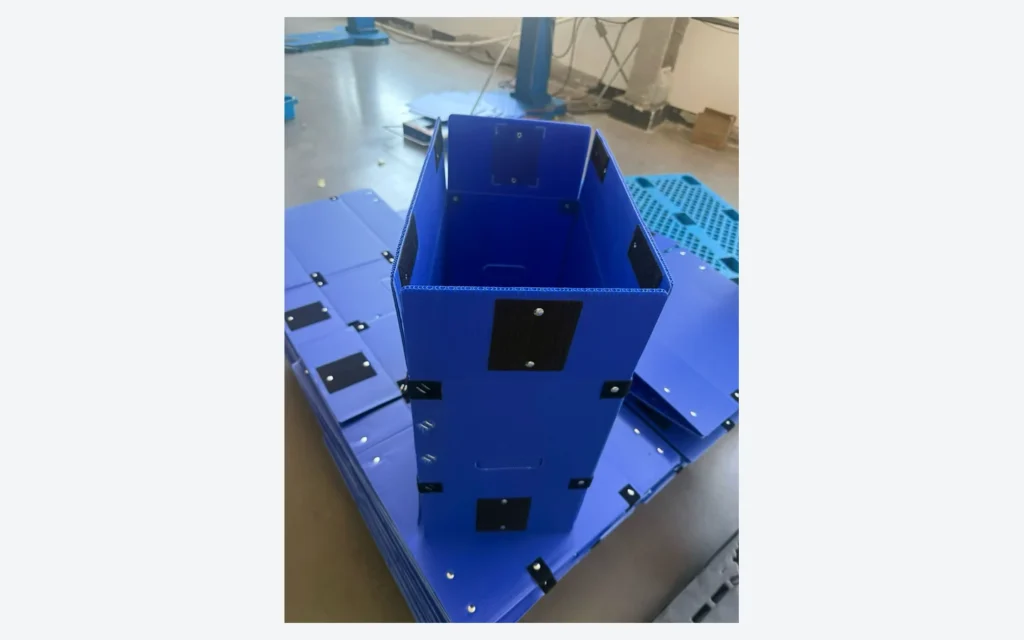
You can start a PP corrugated box inquiry without a finished drawing. Send the product information and constraints you already know, and mark the gaps clearly. That gives the supplier a basis for follow-up questions; it does not make an unconfirmed design ready for production.
An existing box, a marked photograph or a simple sketch can help explain the job. The useful question is what each item establishes—and what still needs measuring.
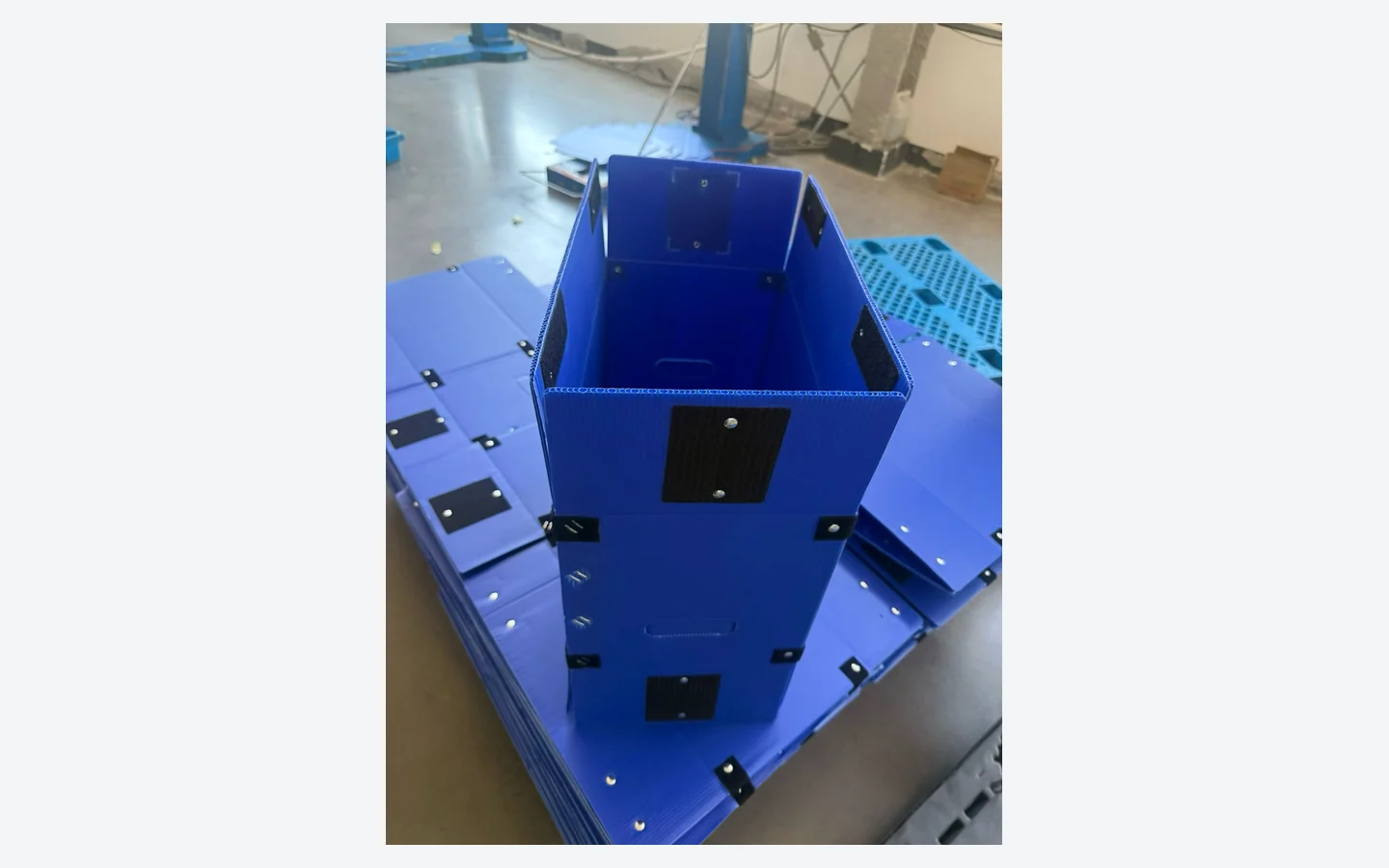
Use photographs to explain the job
Show the product, its intended packing orientation and any existing container. Include a wider view when a shelf opening, trolley or loading station limits the design. A close-up can identify a sharp edge or sensitive surface that a basic size description misses.
A photograph is not a reliable source for precise dimensions or weight. Add measured values separately. If you include a ruler for context, still write down the measurements that matter rather than asking the supplier to scale them from the image.
A simple sketch can be enough to start
Draw the part arrangement and label the units, loading direction and quantity per box. Mark a fixed shelf or pallet limit separately from the space the product needs. You do not need to invent a box dimension to fill a blank.
If you already have box measurements, say whether they are internal, external or collapsed. Use the internal and external dimension guide for measurement points; this avoids turning one ambiguous size into a design assumption.
Separate facts from estimates
Write “measured” beside values you have checked and “estimated” beside planning figures. Describe a fixed constraint explicitly, such as an existing storage opening. Use “Not confirmed” where an input is missing.
For example, a target number of parts per box may be flexible, while an existing trolley opening may be fixed. Stating the difference lets the supplier discuss a workable arrangement instead of treating both as approved requirements.
Copy this into your first inquiry
Replace the blanks with what you know. Keep “Not confirmed” where you need help identifying the next step.
Subject: PP corrugated box inquiry — drawing not yet available
We need a box for: ___.
Product dimensions, units and weight: ___.
Intended orientation and parts per box: ___.
Fixed outside-space limit, if any: ___.
Loading, storage and movement: ___.
Dividers, liners or sensitive surfaces: ___.
Estimated order quantity and destination: ___.
Requested timing: ___.
Measurements confirmed so far: ___.
Items not confirmed: ___.
Photos or sketches available: ___.Please identify the missing information needed to discuss the configuration and quotation.
This is a starting message, not an order specification. If your first contact form does not accept files, mention which photos or sketches are available and arrange the exchange after the reply.
What happens before the specification is agreed?
The first exchange should establish the application and the gaps that affect construction or price. An estimate based on assumptions needs those assumptions stated; it should not be treated as a final quotation for an approved design.
Next, agree the proposed structure and dimensioned configuration, including any lid, divider, liner or fitting. Keep the drawing revision with the quotation so later changes can be checked for their effect on price, packing and timing.
Where a sample is needed, agree what it must demonstrate. Product fit and access are different from load, stacking or transport performance. Record what was checked and leave untested conditions open. For a shelf application, the picking-bin access guide provides a more specific check sequence.
Start with the information you have
Youqian Global supplies PP corrugated boxes for project-specific packaging requirements. Use the available product options to explain the container you have in mind, then send the known inputs and open questions together.