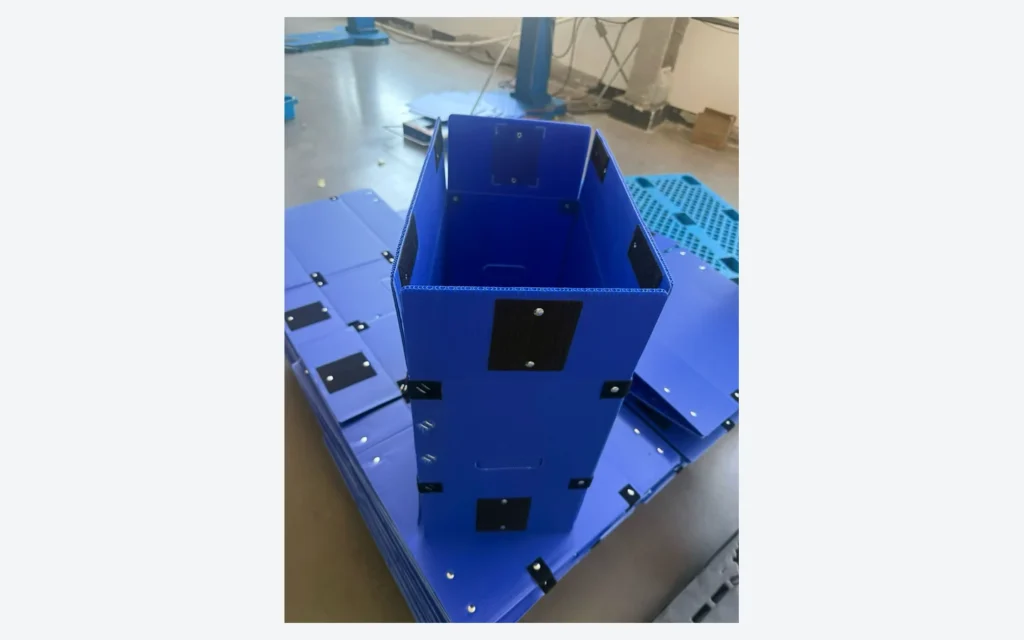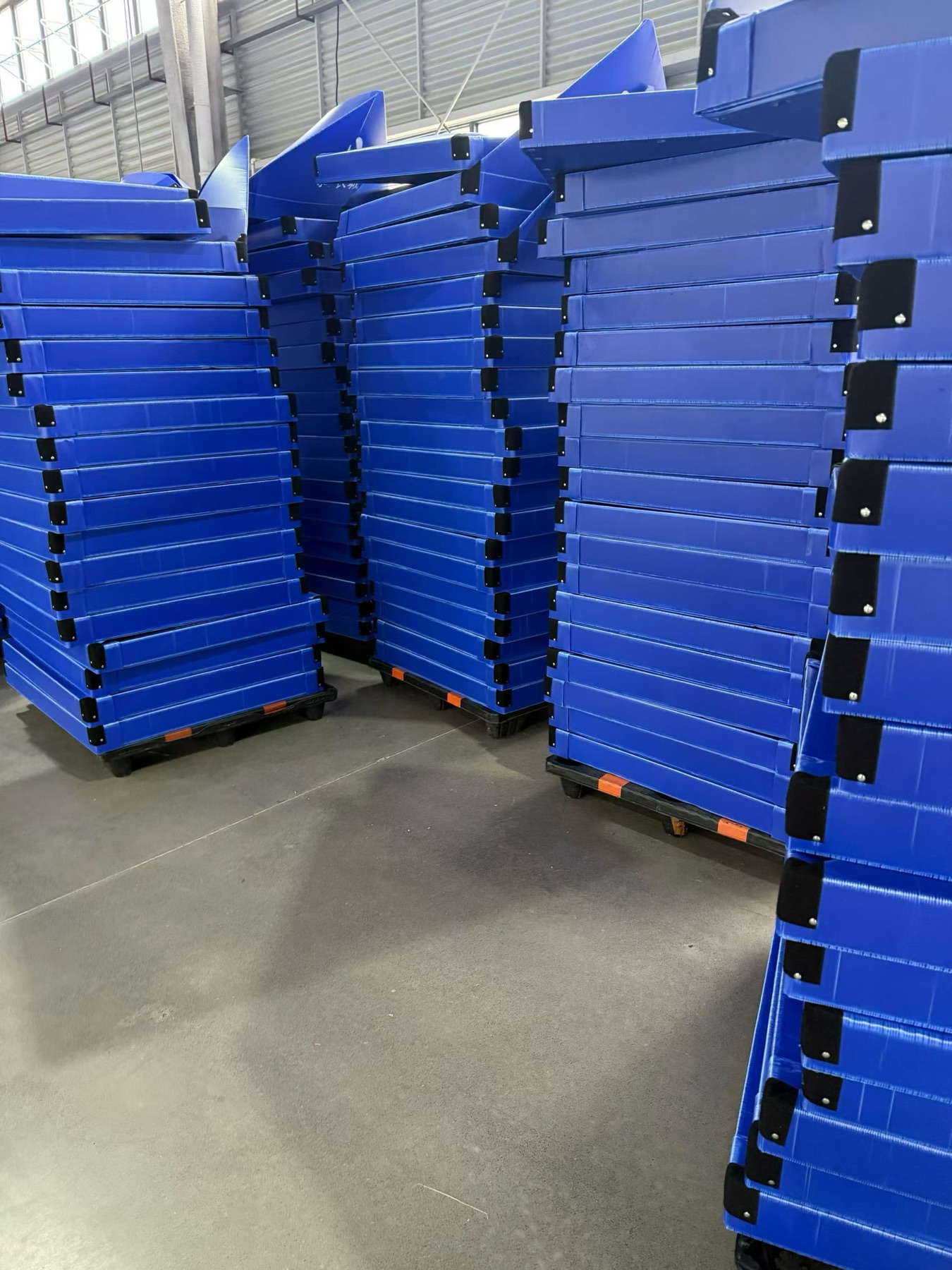
Repeated loading, internal transport and stacking place different demands on a divider box than one-way packaging. A reinforced PP corrugated box should therefore be specified around the packed part, the cell layout and the complete handling route, not by outside dimensions alone.
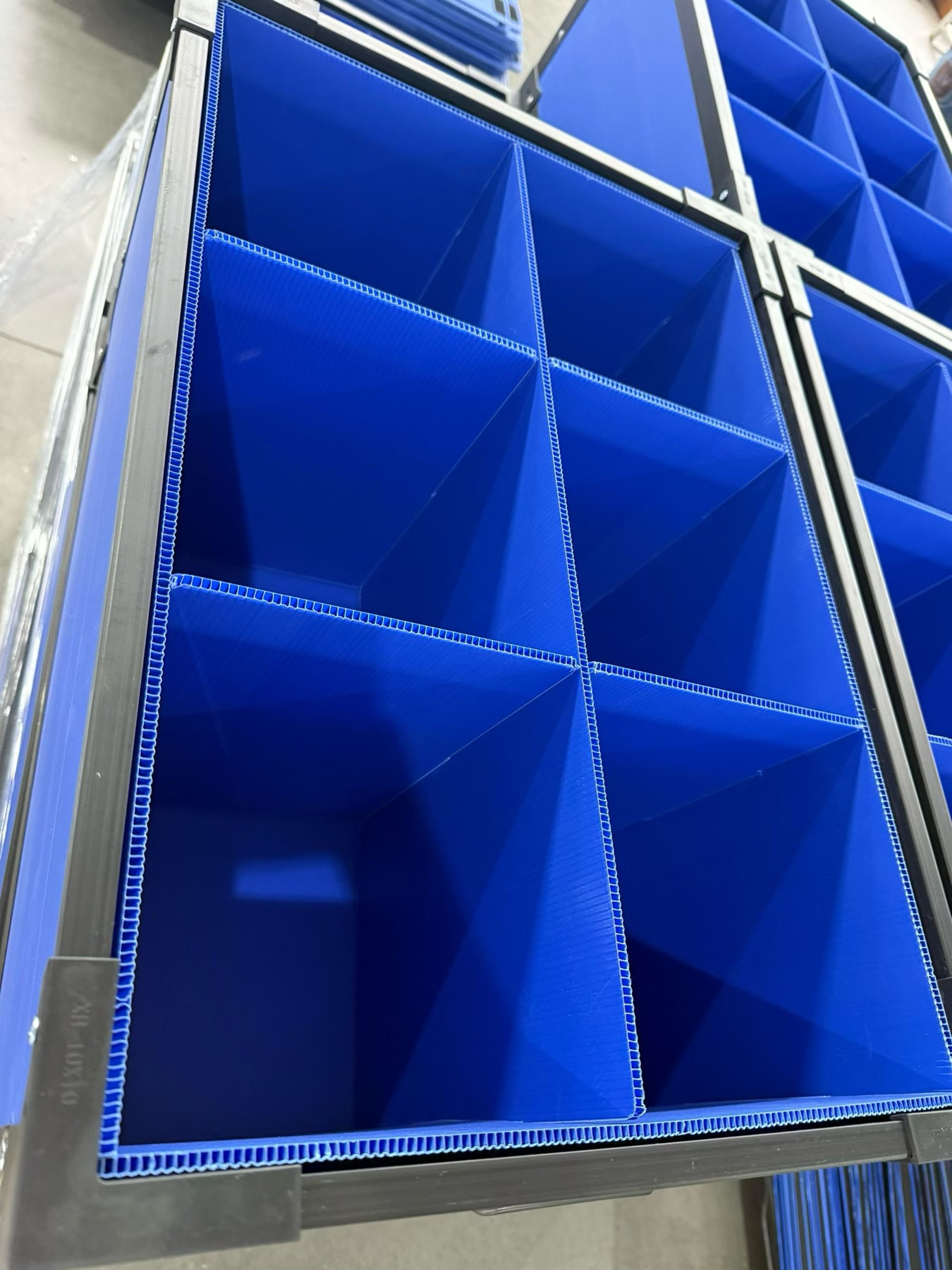
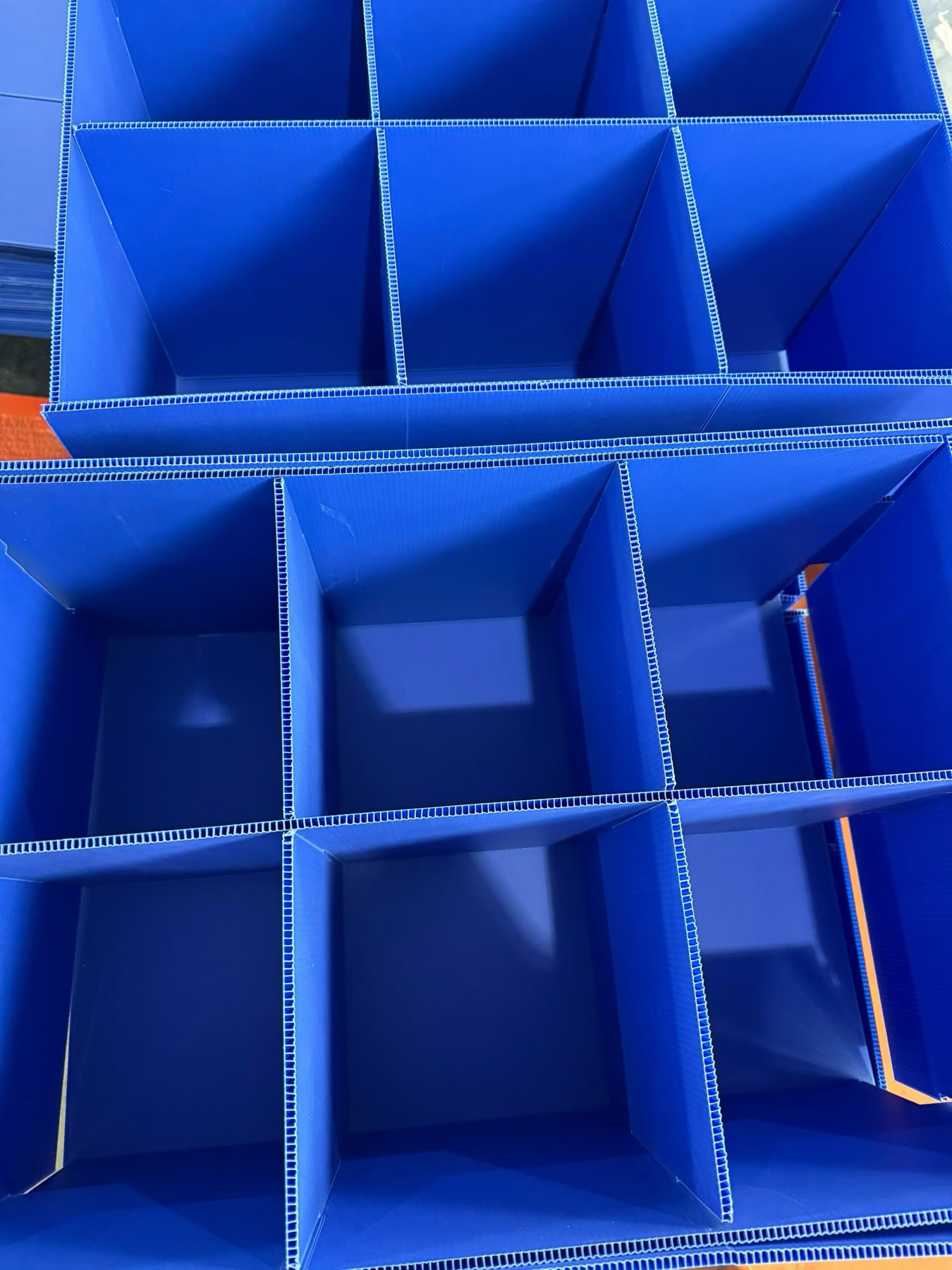
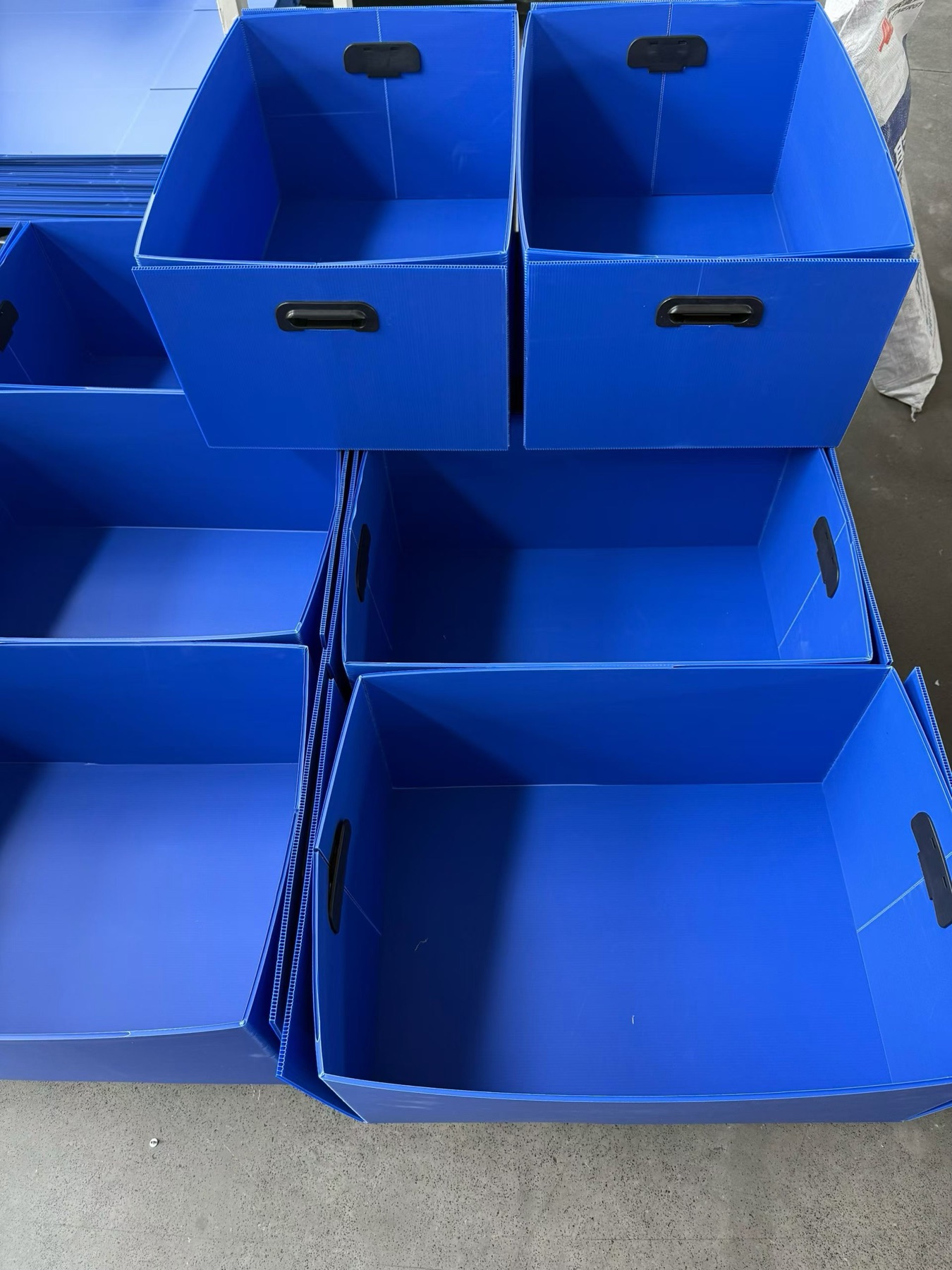
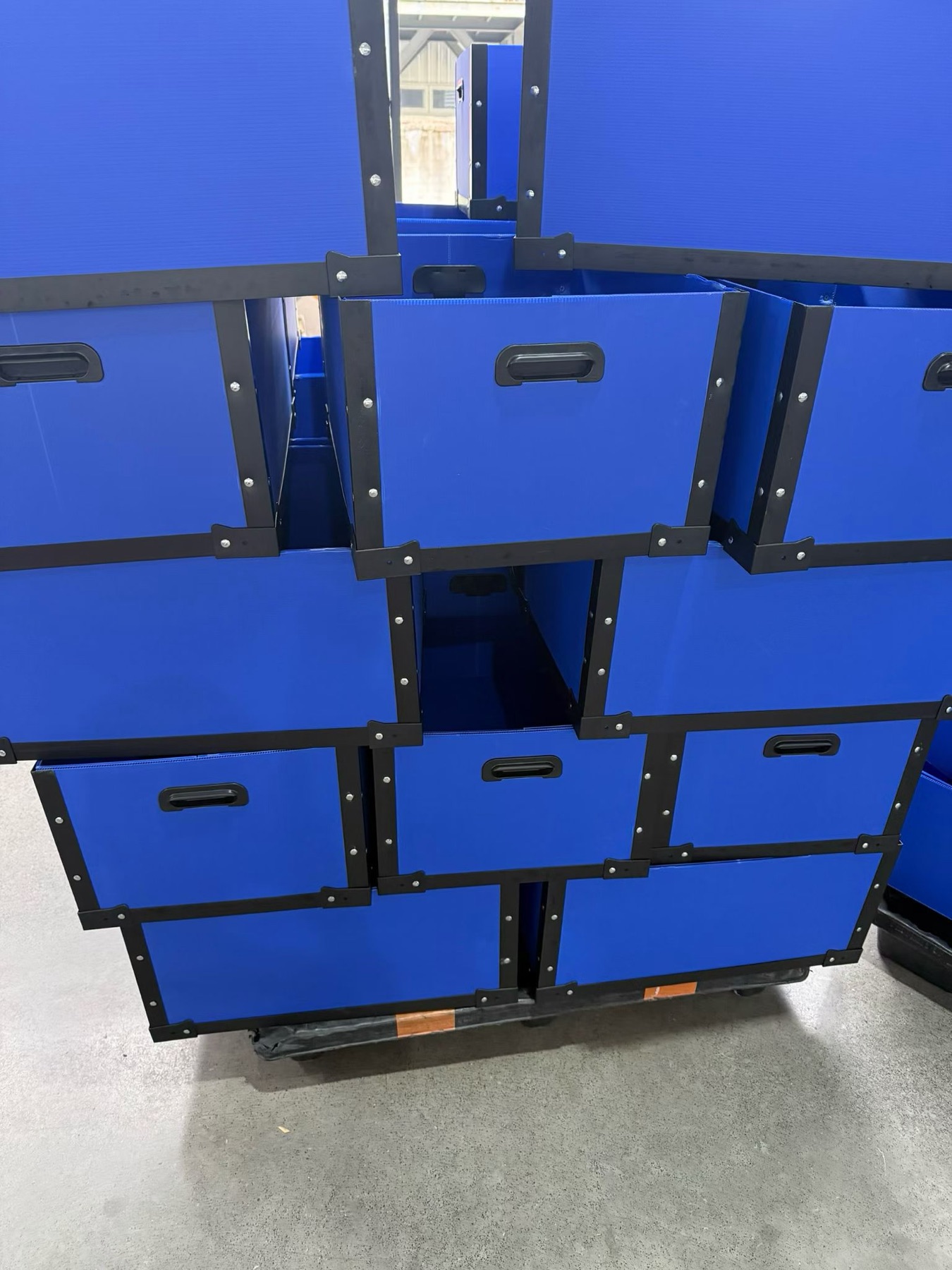
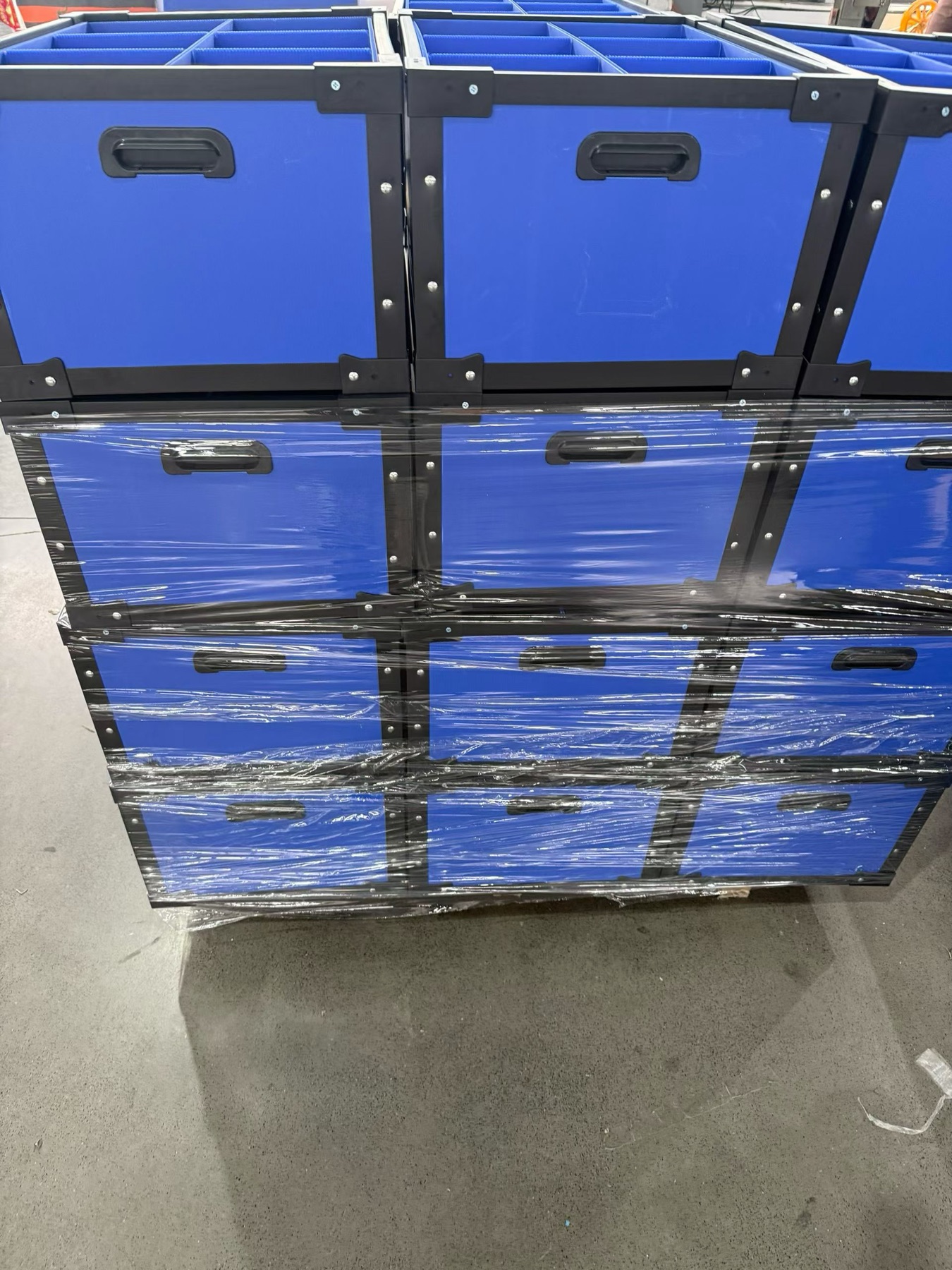
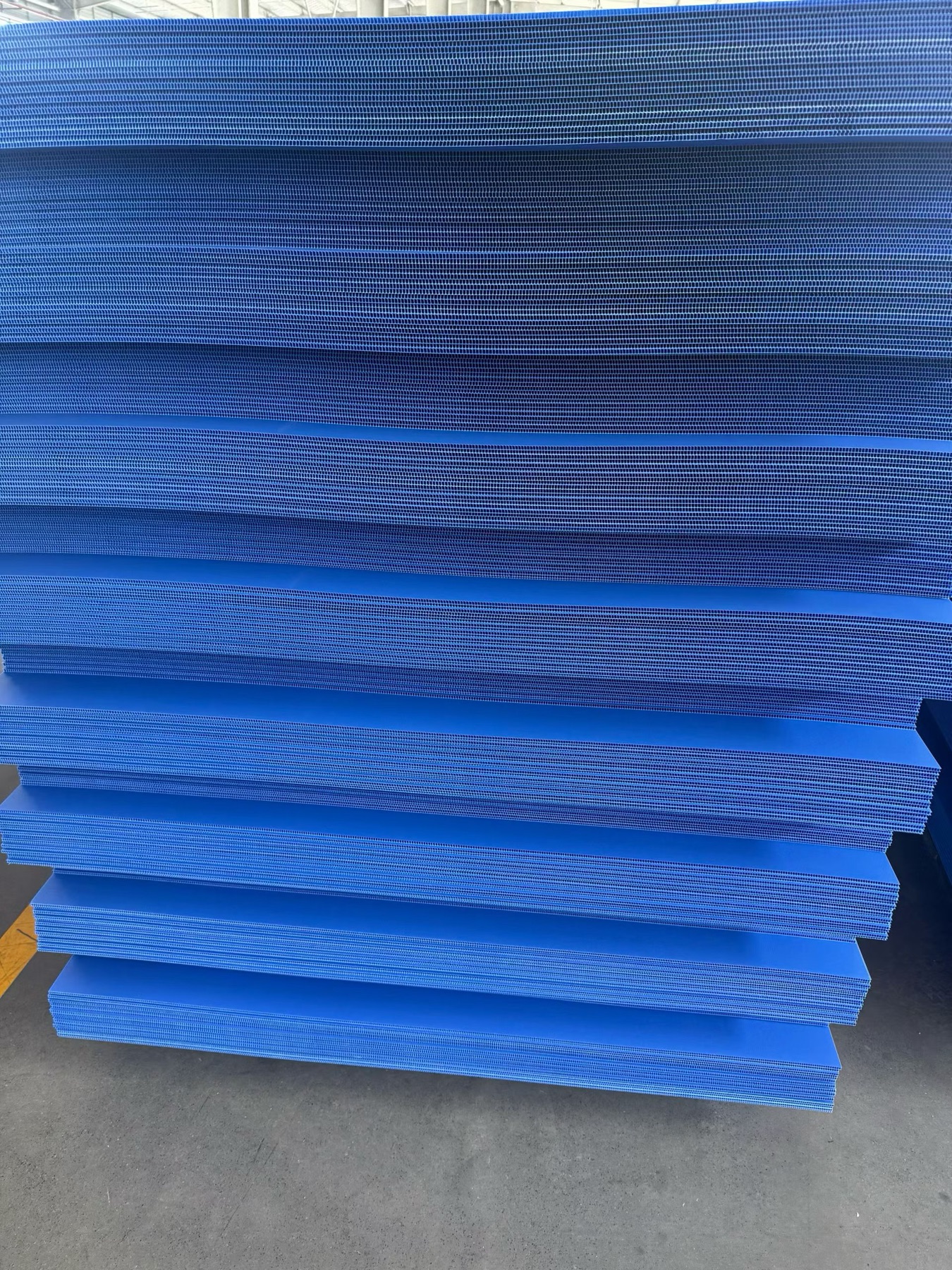
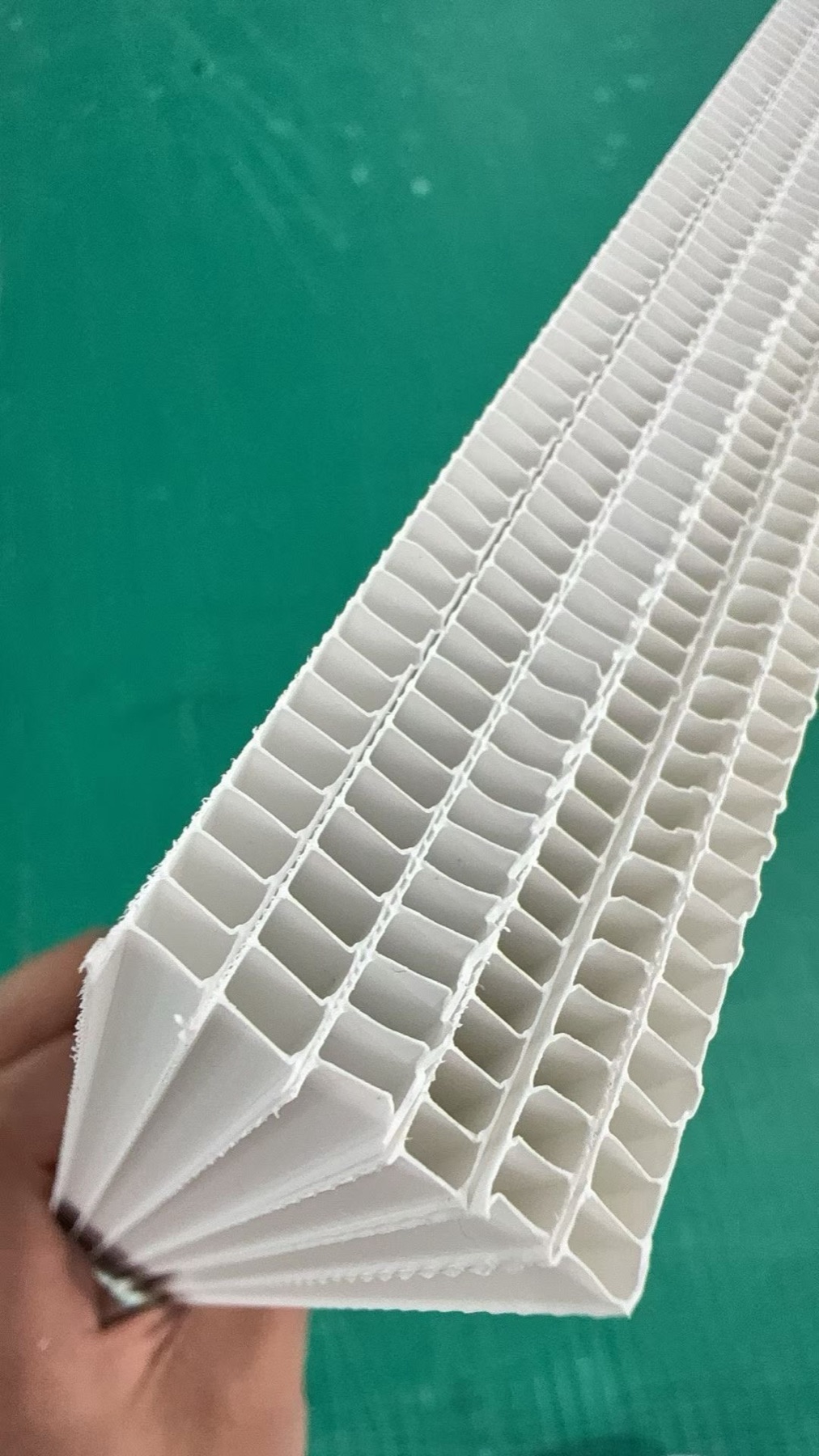
The production photos show blue boxes with rigid perimeter frames, fitted plastic dividers, hand holes and batch packing. They also show the PP hollow sheet blanks and assembly steps behind the finished structure. These details help buyers compare a practical design instead of requesting a generic box quotation.
Start with the Box and Part Dimensions
State whether the required box dimensions are internal or external. Then provide the part length, width and height, including any surface or corner that must not contact another part. A drawing, packing sketch or clear reference photo reduces uncertainty.
For a useful quotation, send these project details:
- Box size: internal or external L x W x H.
- Part and cell layout: part dimensions, number of cells, cell size and loading direction.
- Loading weight: weight per part and total net weight per filled box.
- Handling and stacking: manual carrying, trolley, pallet, conveyor or vehicle transfer, plus filled stacking height.
- Quantity: sample demand, first order quantity and expected repeat volume.
- Destination country: required for reviewing export bundling, pallet and container packing.
Design the Divider around Loading and Unloading
The number of rows and columns is only the starting point. Cell dimensions should allow the part to be loaded and removed without excessive movement or pressure. Finger notches, stepped profiles and local cut-outs can improve access when operators handle parts repeatedly.
The divider must also fit the box base and side walls. If the product has an irregular profile, send a drawing or physical reference so the divider geometry can be reviewed before sampling.
Match Reinforcement to the Handling Path
Perimeter frames, reinforced corners, base supports and hand holes should be selected according to where the box is lifted and where impact is likely to occur. A box carried by operators has different requirements from one moved on a pallet or repeatedly transferred between production stations.
Loading weight alone does not define the structure. Also explain whether boxes are pushed, stacked while filled, returned empty, exposed to moisture or cleaned between cycles. This information guides the frame, joint and closure discussion without relying on unsupported load claims.
Specify Stacking and the Return Route
Give the required filled stacking height and describe any pallet footprint or rack opening the box must fit. If empty boxes return to the supplier or another plant, confirm whether the design should fold, nest or remain assembled. Return logistics can change the best box and divider construction.
Confirm Sheet and Thickness after the Load Details
Sheet thickness, flute direction and local reinforcement should be reviewed after the dimensions, divider layout, loading weight and handling method are known. Color can support part identification or warehouse zoning, but it should not replace structural information.
Review Production and Export Packing
Before production, confirm the drawing, sample fit, cell orientation, handles, reinforcement points and packing method. Order quantity and destination country help determine whether finished boxes and divider sets should be bundled, wrapped, cartoned or palletized for shipment.