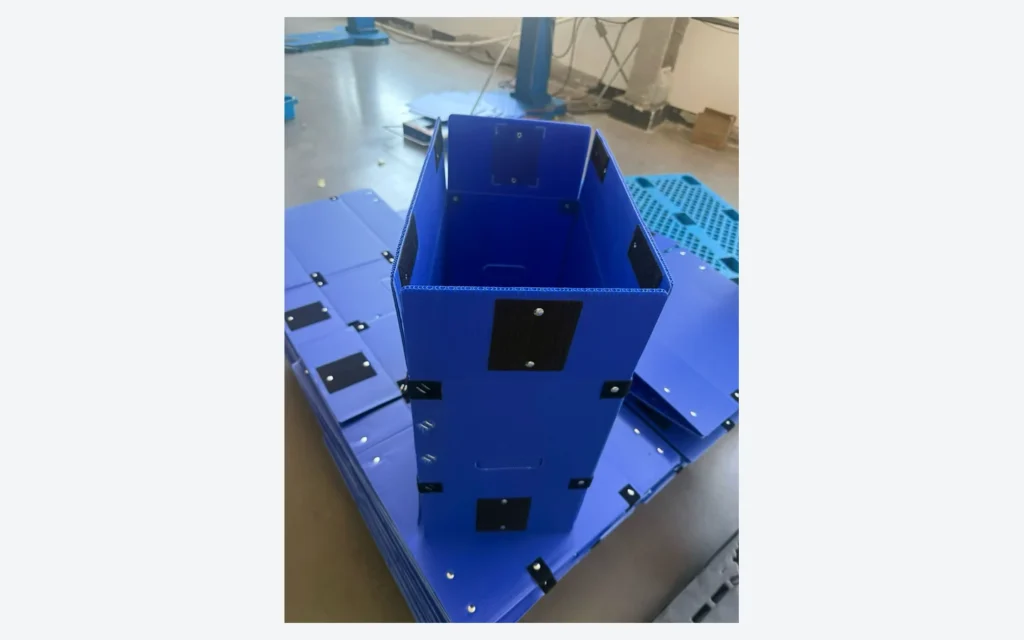
Automotive returnable packaging is not simply a durable box. The working system includes the component, internal divider or pad, container, operator, transport route and empty return. I usually begin with three questions: how is the part loaded, where can it safely touch the packaging, and what changes between the full and empty journeys?
A reusable concept can fail when one of those conditions is assumed instead of recorded. A divider may hold a component at rest but make removal difficult. A box may fit the external footprint but leave less usable internal space than the drawing suggests. A stable outbound stack may become inefficient on the return route.
The useful starting information is therefore practical: part dimensions and orientation, acceptable contact areas, box dimensions, quantity per container, loading direction, handling points and the known route. Photos or drawings help, but they do not replace a short description of the real packing operation.
After the inputs are reviewed, a packaging team can compare divider, layer-pad and box structures. A prototype may then be needed to confirm access, fit and handling. The result should be recorded as an accepted project structure—not treated as a universal promise for every route or part revision.
For automotive supply-chain work, confidentiality also matters. Public examples should describe the application without implying a direct OEM relationship unless the commercial chain and permission are verified.
Next step: submit the application details for a project-specific review.