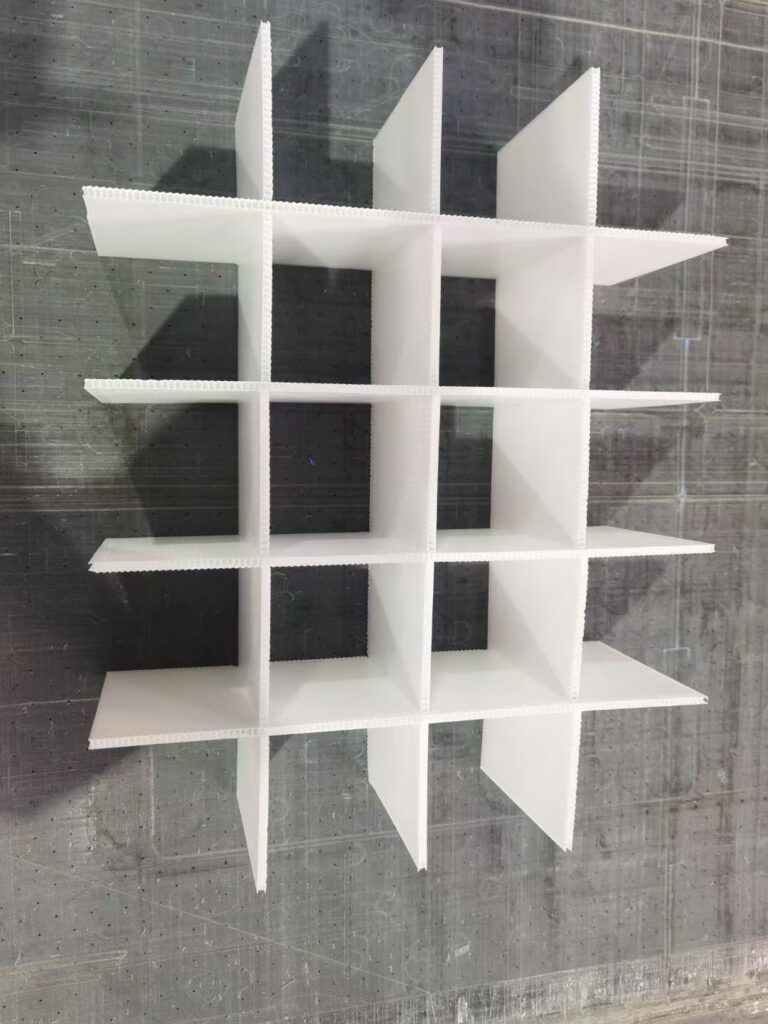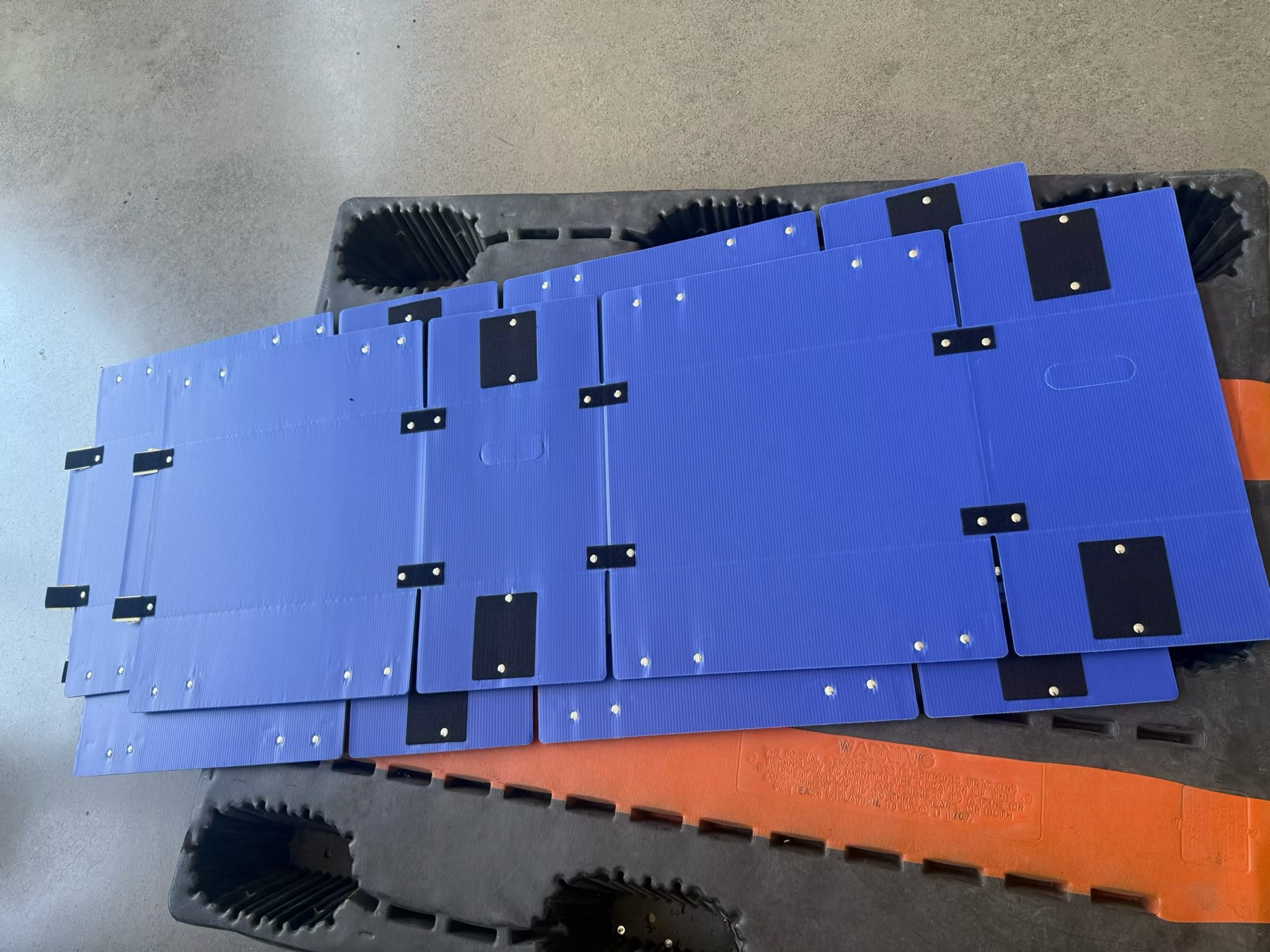
Will the loaded container be carried by hand, moved on a cart, or transferred on a pallet? Put that answer near the top of a packaging brief. A drawing can show where a hand opening sits. It cannot establish how the loaded package will be used.
Before reviewing a PP corrugated box, describe the route between packing, storage, use and return. Unknown details can stay open, with a person assigned to confirm them.
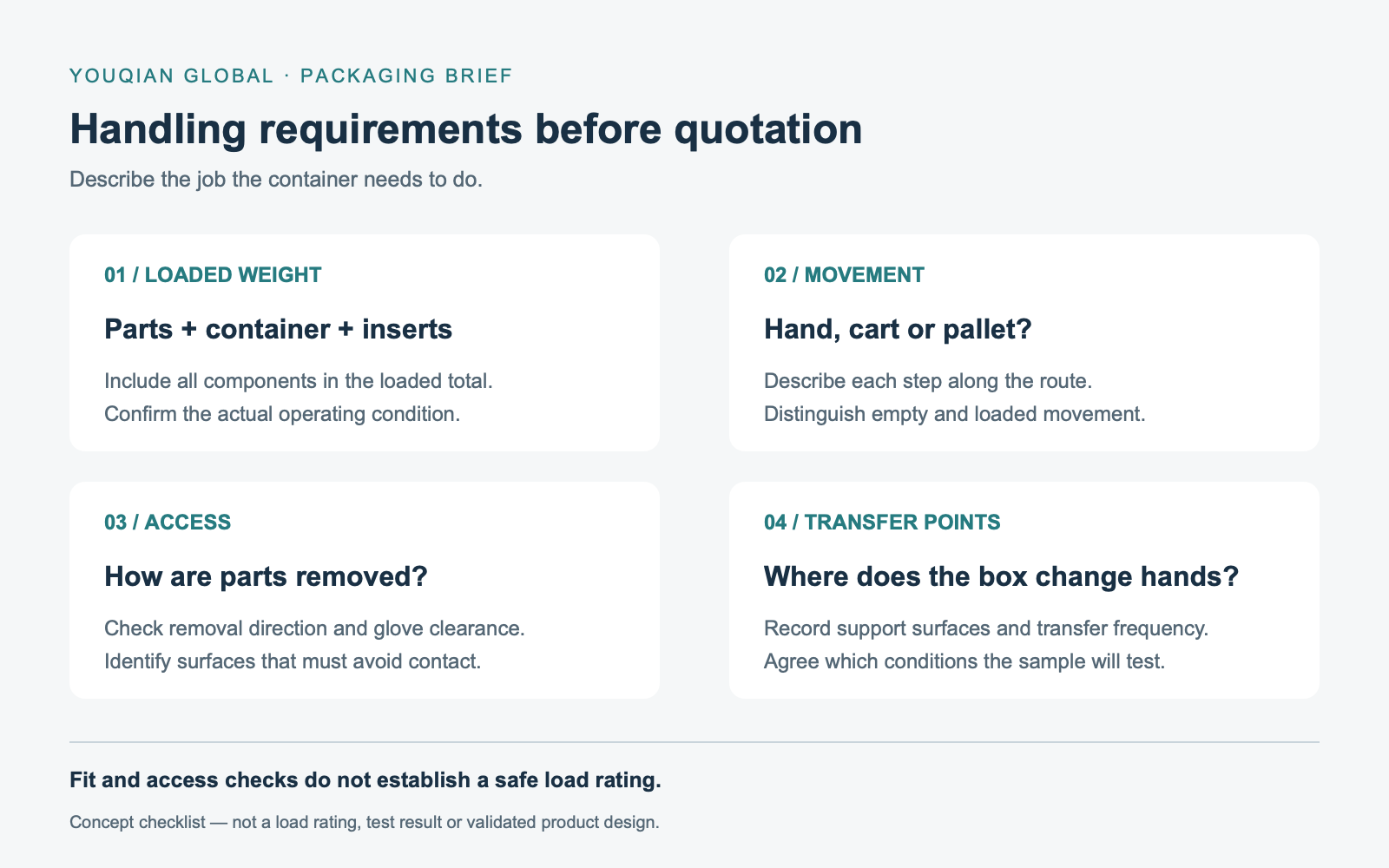
Describe the load people will actually handle
Record the part weight, parts per container and expected loaded package weight. Include the container and any inserts when estimating the total. Identify whether the contents remain in position during movement and whether a lid or restraint is needed for the proposed arrangement.
Do not turn an estimated weight into an approved load rating. The packaging construction and intended operating conditions still need review. There is no universal safe carrying limit offered by this checklist; the workplace must assess the task and applicable requirements.
Follow the package through each transfer
Write down where the package starts, how it moves and where it is opened. A hand-carried transfer between two benches raises different questions from a container that stays on a cart. Note the support surface, available space, carrying frequency and whether the package is handled empty or full.
For illustration, a hypothetical brief might read: “The container stays on a cart between storage and the workbench. Parts are removed from above. Empty containers return on a pallet.” This is an input example, not a customer case or a validated design.
Check access with the intended contents
Explain how the operator loads and removes each part. Include the loading direction, any restricted contact area, and whether gloves are used. Ask whether fingers can reach the intended grip without contacting a sensitive surface or catching on an adjacent component.
An empty-box photo can help locate an opening. A representative sample with the intended contents is needed to review the proposed access. State what the trial should answer: Can the part be removed in the intended direction? Does the insert obstruct the grip? Does the loading sequence match the actual task?
Agree what a sample is being checked for
Give each sample review a defined scope. Fit, access and assembly are useful checks, but they do not establish transport, stacking or repeated-use performance. Those questions require their own agreed conditions and acceptance criteria.
Record the sample revision, contents, load arrangement, handling task, reviewer and result. Identify the location of any issue before proposing a change. For a feedback format and photo checklist, see How to Give Useful Feedback on a Packaging Sample.
Use a short brief before requesting a quotation
| Input | Information to supply |
|---|---|
| Contents | Part dimensions, weight, orientation and sensitive areas |
| Load | Parts per package and expected total loaded weight |
| Movement | Hand, cart or pallet; empty and full movement |
| Access | Loading and removal direction, glove use and space constraints |
| Transfer | Start and end points, support surfaces and frequency |
| Validation | Sample revision, task to check, reviewer and acceptance criteria |
| Purchase | Quantity, destination and required timing |
Mark missing details as “to confirm.” This keeps an incomplete assumption visible when the specification moves between purchasing and the people who will use the package.
Youqian Global is the international-facing brand of Youqian Technology (Nantong) Co., Ltd. Available converted packaging includes PP corrugated boxes, framed boxes, divider systems and layer pads. A project review should connect the proposed construction to the handling brief; a product name or sheet thickness alone does not confirm suitability.
Browse the packaging product families or submit an initial requirement. Include the application, known dimensions, estimated quantity, destination and handling route. The general contact form does not support drawing or photo upload; file exchange can be arranged after the initial reply.
Common questions
Is an empty-container photo enough to confirm handling?
It can document the visible construction. It cannot confirm loaded access, carrying comfort or performance. Define the intended task and review a representative loaded configuration.
Can one sample check cover fit and transport performance?
A fit or access check answers its stated question. Transport and stacking need separately defined loads, conditions and acceptance criteria; they should not be inferred from a successful fit check.
What if the handling route is not known yet?
List what is known and identify who will confirm the rest. Ask the intended users how the package moves and opens before approving the final construction.
Reference
ORBIS — Dunnage: general reference for considering part dimensions, weight, orientation, protection and handling when preparing a packaging brief. This article does not adopt another supplier’s product specifications or test results.