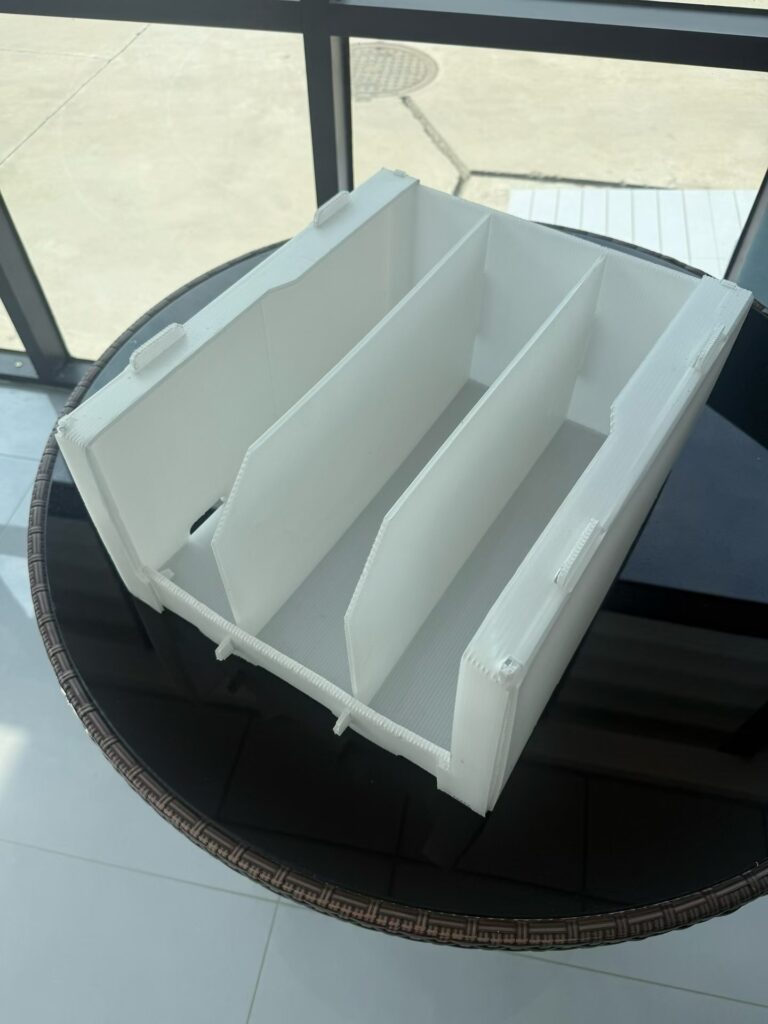
I do not start a PP divider design with thickness. I start with the part and the packing operation. The first drawing can show overall size, but it often leaves out orientation, safe contact points and how an operator will place or remove the component.
The minimum useful input is a part description, dimensions, intended orientation, quantity per box and the usable internal box dimensions. Add the loading direction, whether parts can touch, and any areas that should not contact the divider. If there is an existing tote, measure the inside rather than relying only on the nominal outer size.
Tolerance deserves a separate note. A cell sized to one nominal drawing can be too tight when part variation, divider conversion and box deformation meet. Too much clearance can create movement. The design question is not “does the number match?” but “does the accepted range work during loading, transport and removal?”
Next, record the route. Is the packaging used inside one plant, between suppliers, or through a longer logistics loop? How will the full container be handled? What happens during empty return? These questions influence the divider height, layout and relationship with the outer box.
Finally, define how the project will be confirmed. A concept drawing explains intent. A physical sample can reveal access, fit and handling issues. Production should follow recorded acceptance criteria rather than an informal visual approval.
Next step: submit the application details for a project-specific review.