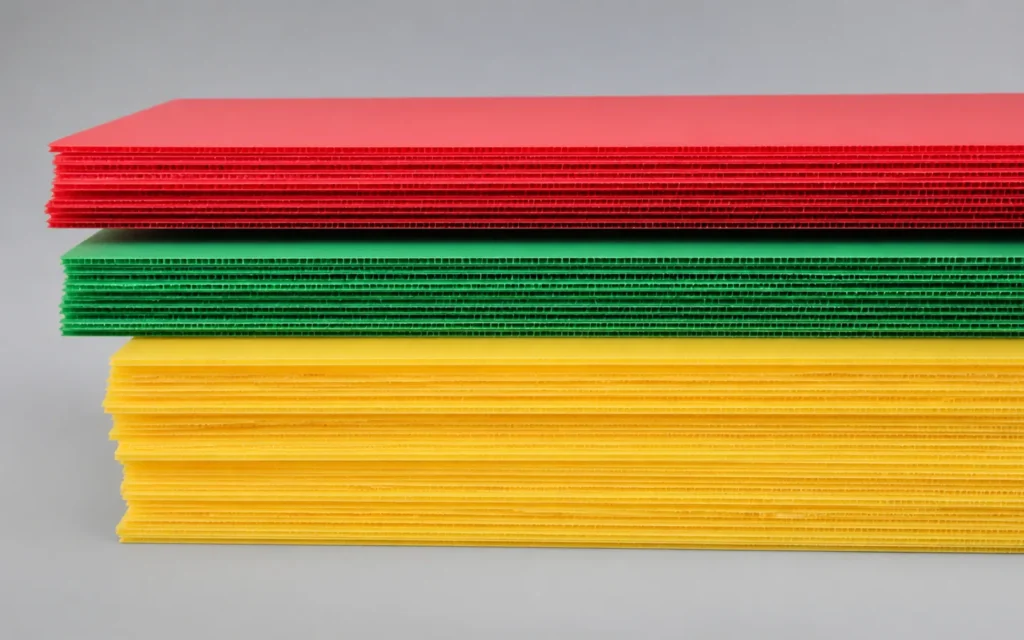
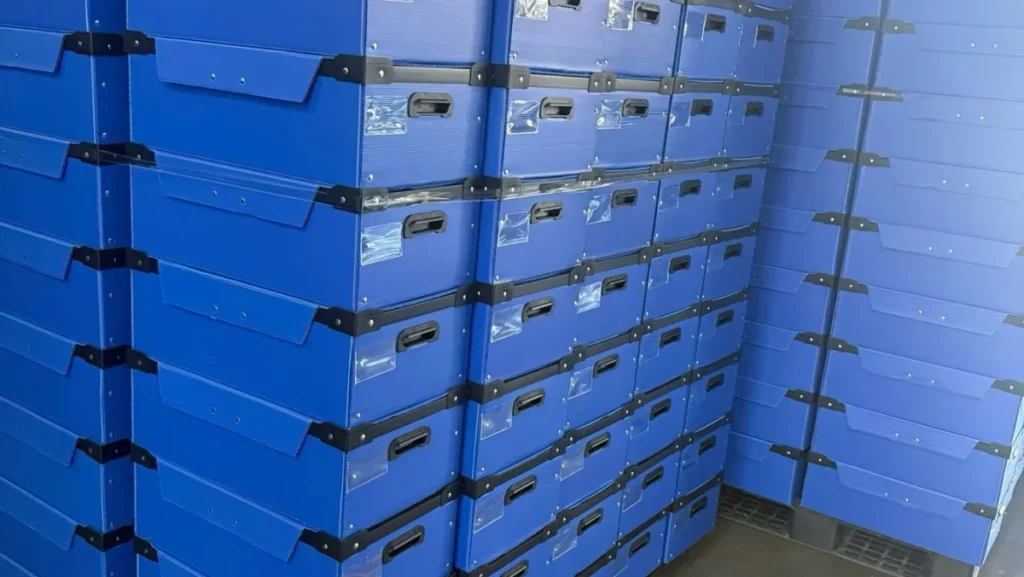
Two PP hollow sheet parts can have the same length, width, thickness, and color but still be different if their internal channels run in different directions. For a standard stock sheet, that detail may appear simple. For a cut blank, folding box, divider, or layer pad, it can affect how the part relates to folds, slots, cutouts, unsupported spans, and handling points.
That is why flute direction should not be left as an assumption in a custom packaging drawing.
Quick answer
PP hollow sheet flute direction is the direction in which the internal parallel channels run between the two outer skins. Buyers can usually identify it at an open cut edge. For custom parts, add an arrow labeled “Flute Direction” to the drawing and show how it relates to the finished length, width, folds, slots, and cutouts.
Flute direction is only one design input. It does not, by itself, guarantee the performance of a box, divider, or layer pad. Thickness, dimensions, span, cell layout, load, stacking, folding, and handling conditions must also be reviewed.
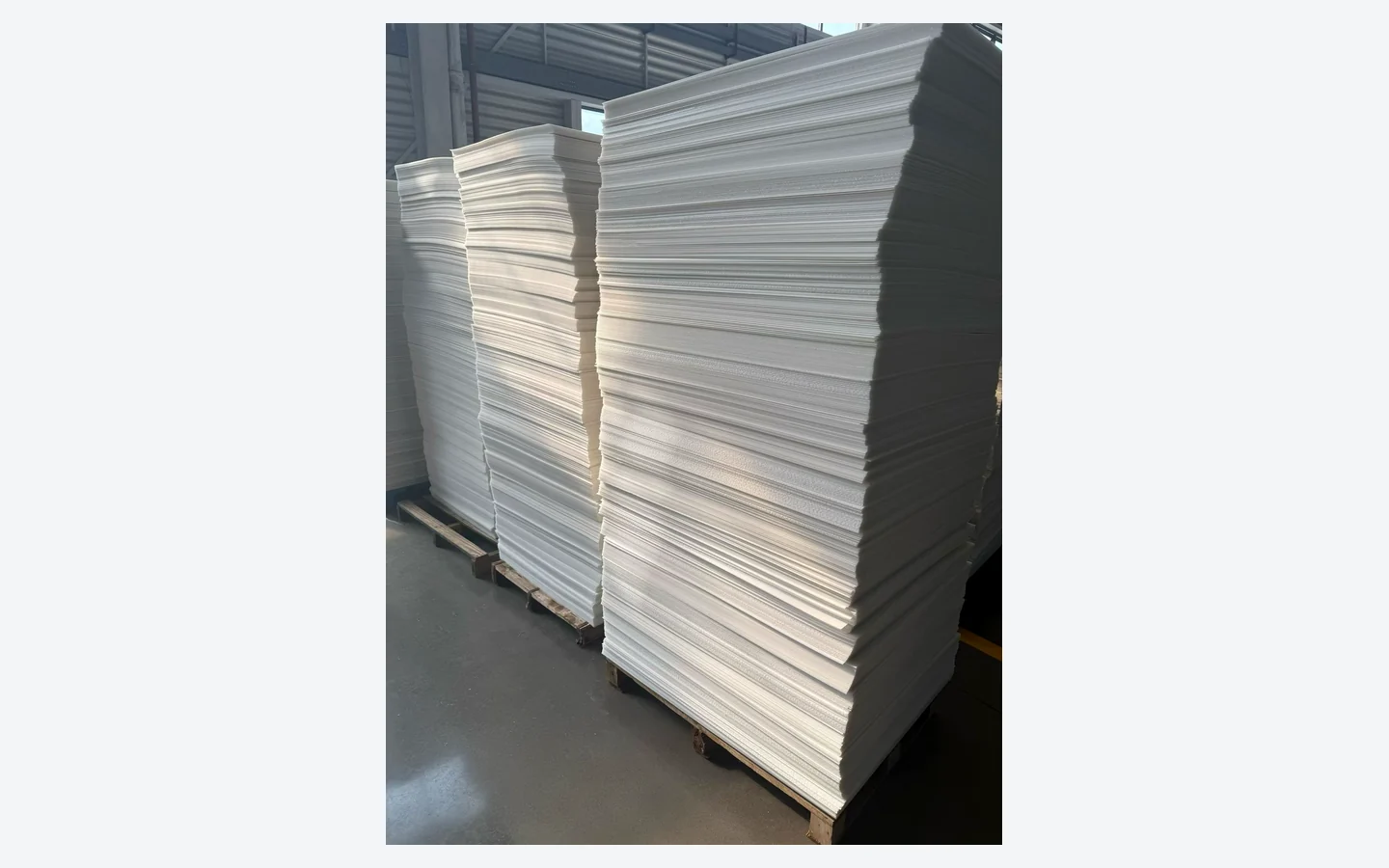
*Real cut PP hollow sheet pieces showing the internal flute direction at the edges.*
What is flute direction in PP hollow sheet?
PP hollow sheet has two outer surfaces connected by internal parallel channels, often called flutes. The direction of those channels is the flute direction.
On a rectangular cut piece, the channels may run parallel to the long side or the short side. The finished length and width alone do not tell the supplier which orientation the buyer expects. A directional arrow removes that ambiguity.
For an existing sample, inspect the open edges:
- An edge showing repeated channel openings is cut across the flutes.
- An edge that follows the channel length may not show the same row of openings.
- A close-up edge photo can help a supplier confirm the orientation before quoting or sampling.
If the part has sealed, covered, or difficult-to-see edges, use the approved drawing or ask the supplier to confirm the orientation from a physical sample.
Why should flute direction appear on the drawing?
Custom PP corrugated packaging often includes more than a rectangular sheet. A finished part may have folds, slots, tabs, handles, finger cutouts, interlocking joints, or several assembled components.
Marking the direction helps the buyer and supplier review the same construction. It is especially useful in four situations.
1. Cut sheets and converted blanks
A cut blank can include trimmed corners, holes, slots, or printed areas. Show the flute arrow together with the finished length and width so the cut pattern is not rotated during drawing conversion.
2. Folding boxes and panels
For folding parts, show both flute direction and every fold line. Also identify which side faces inward or outward if the surfaces are not interchangeable in the finished design.
The correct orientation cannot be selected from a general rule alone. The box dimensions, fold pattern, reinforcement, load, stacking, and handling method all belong in the review. Buyers sourcing PP corrugated boxes should provide the finished configuration rather than only a flat blank size.
3. Dividers and cell partitions
An interlocking divider contains multiple slotted pieces. If the orientation is not defined, a drawing can show the right cell count but still leave the direction of each component unclear.
For plastic divider solutions, specify:
- overall assembled length, width, and height;
- number of rows and columns, or the required cell layout;
- clear internal cell dimensions;
- slot positions and slot depth;
- finger cutouts or other handling features;
- flute direction for each part type;
- per-cell or overall load information;
- whether the grid is removable, collapsible, or fixed inside another container.
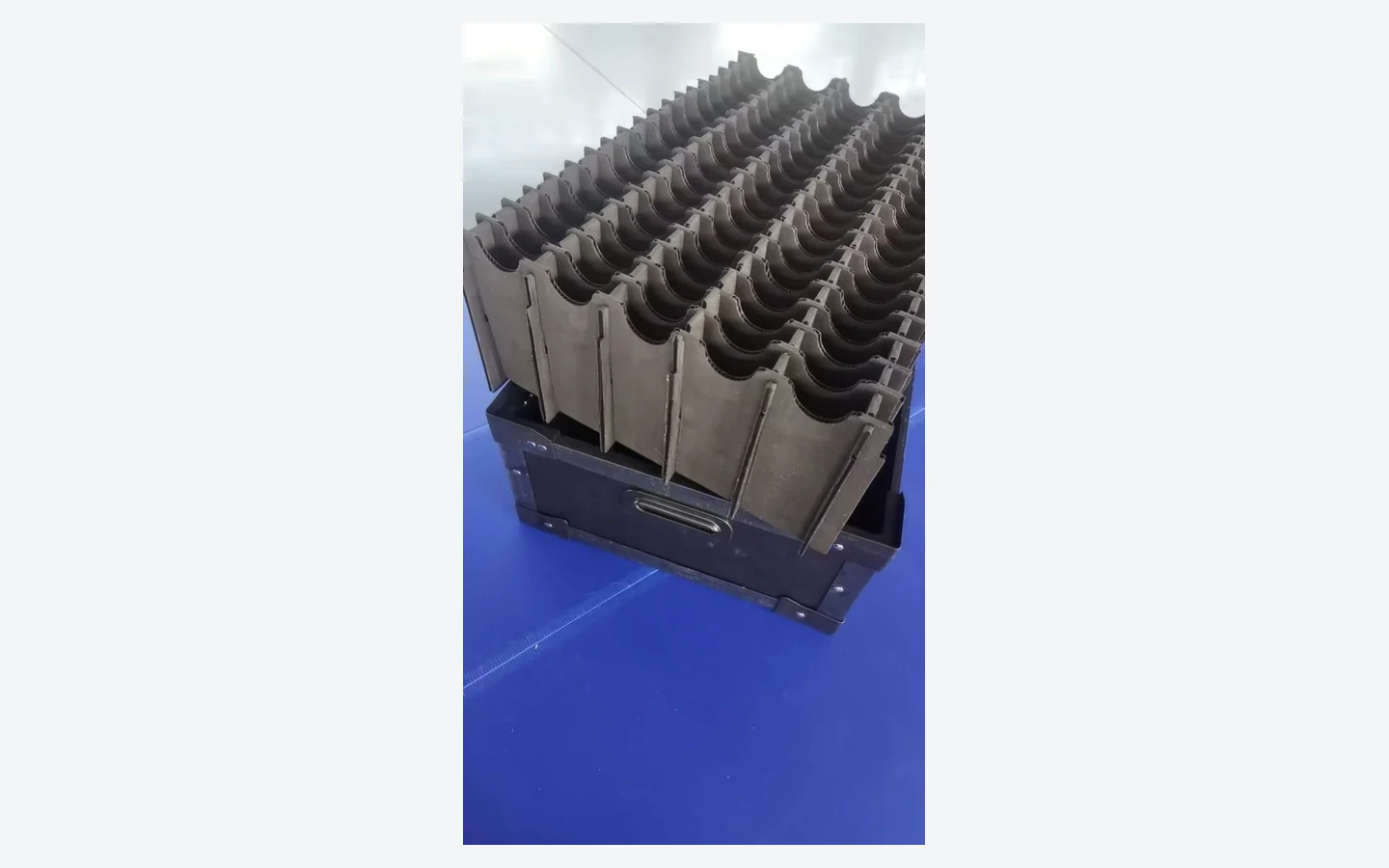
*Interlocking divider parts show why orientation should be marked before slots and cell layouts are finalized.*
4. Layer pads
For a PP layer pad, mark the direction relative to the pallet or supported product layout. Also provide the finished pad size, thickness requirement if already fixed, load arrangement, pallet conditions, and handling method.
Flute direction should be reviewed together with span and support conditions. It should not be treated as a standalone statement that one orientation is always suitable for every load.
How to mark flute direction on a buyer drawing
A useful drawing does not need to be complicated. A clear one-page PDF can be enough when it contains the information required to identify the finished part.
Include:
- Finished dimensions and units. State length × width × height where applicable and make clear whether dimensions refer to a flat blank or an assembled part.
- A flute-direction arrow. Draw an arrow parallel to the internal channels and label it “Flute Direction.”
- Part orientation. Identify top, bottom, inside, outside, or front when these faces matter.
- Finished features. Dimension folds, slots, tabs, cutouts, holes, handles, and printed areas from stable reference edges.
- Assembly information. For dividers or multipart packaging, give each component a part number and show the assembled layout.
- Revision and approval reference. Add a drawing revision or sample reference so that both sides can confirm which version is approved.
A photo can support the drawing, but it should not replace dimensions. Perspective and scale in a photo may make the orientation easy to misread.
Sample approval checklist
Before production, compare the physical sample with the approved drawing. Check:
- the channel openings at the expected edge;
- the flute arrow relative to finished length and width;
- overall dimensions and assembled dimensions;
- fold, slot, tab, handle, and cutout positions;
- divider cell layout and clear cell size;
- fit with the buyer’s product, tote, pallet, or outer container;
- the intended loading, stacking, folding, and handling method.
Where application performance matters, evaluation should use the actual or representative load and handling conditions. Flute direction alone is not a substitute for application-specific confirmation.
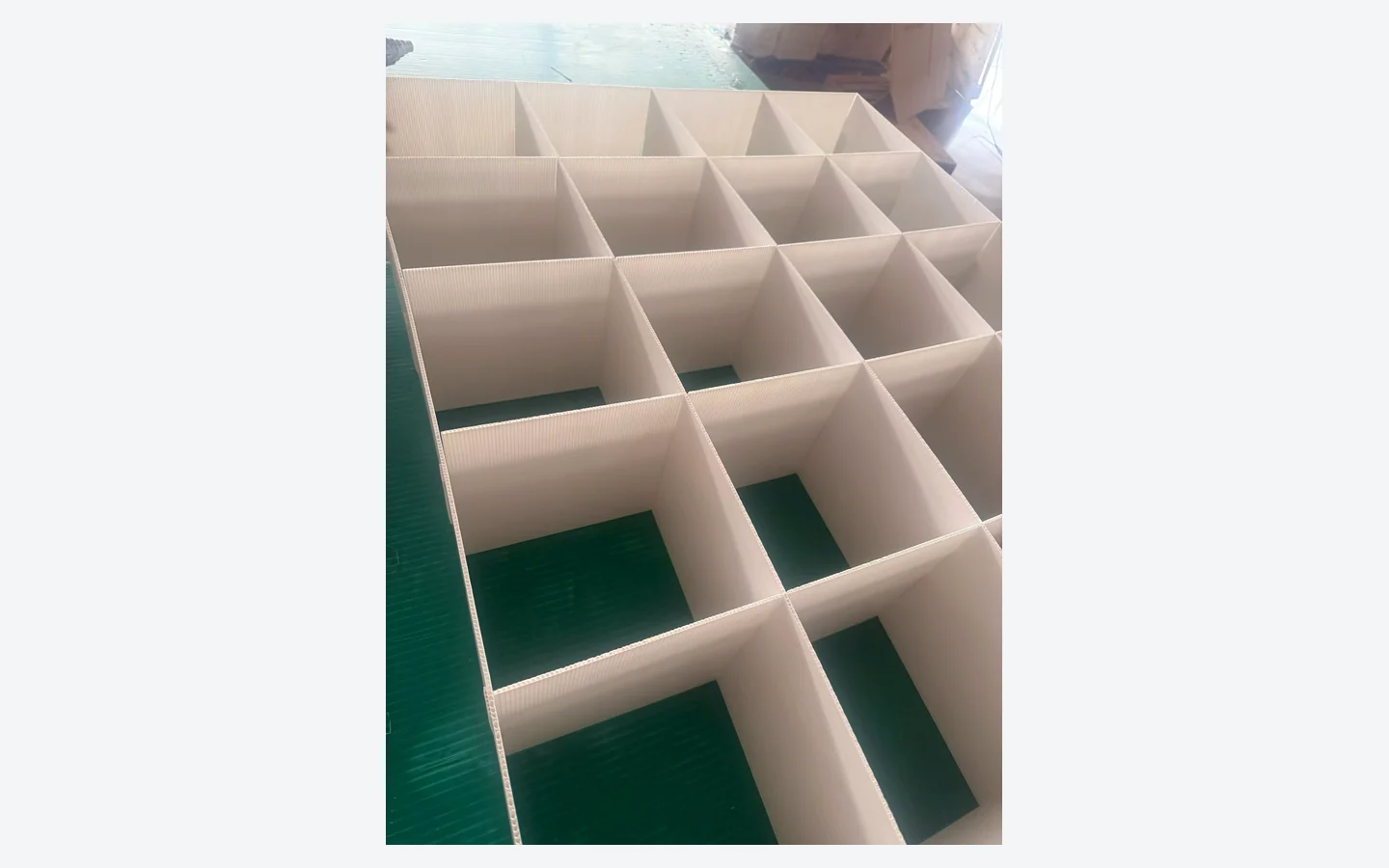
*A custom divider grid with finger cutouts; final cell layout and orientation should match the part and handling method.*
What to send for an accurate quotation
To reduce clarification rounds, send the following information in the first RFQ:
- product type: sheet, cut blank, box, divider, or layer pad;
- application and the item being protected, separated, or transported;
- finished size and quantity;
- required thickness, if already specified, or a request for supplier review;
- flute direction marked on the drawing;
- color;
- folds, slots, cutouts, handles, printing, or other finished features;
- load, stacking, folding, and handling conditions relevant to the application;
- destination;
- drawing, reference photos, or an existing sample.
If a parameter is not fixed, label it as open for review rather than entering an estimated value. That gives the supplier a clear distinction between mandatory requirements and design questions.
You can also review Youqian Global’s packaging applications and company information before submitting a project.
Frequently asked questions
What is PP hollow sheet flute direction?
It is the direction in which the internal parallel channels run between the two outer skins of PP hollow sheet. On a cut part, the channel openings are usually visible at an edge cut across the flutes.
How can I identify the flute direction on a sample?
Inspect the open cut edges and look for the repeated channel openings. Add a clear arrow to a photo or drawing and ask the supplier to confirm it when the edge is sealed or difficult to see.
Is one flute direction always stronger?
No universal orientation should be selected from flute direction alone. The appropriate construction depends on the part geometry, thickness, span, folds, slots, load, support, stacking, and handling conditions. Application-specific review or sample evaluation may be required.
Should flute direction be marked for PP dividers?
Yes. Mark it for every distinct divider component, together with the overall size, cell layout, slot positions, clear cell dimensions, and load information. This helps prevent a part from being rotated during drawing conversion.
Does flute direction matter for PP layer pads?
It should be defined and reviewed relative to the pallet, product arrangement, span, supports, and handling method. It is one part of the layer-pad specification, not a standalone performance guarantee.
What information should I send for a custom quote?
Send the product type, application, finished dimensions, quantity, thickness if fixed, color, flute direction, finished features, relevant load and handling conditions, destination, and any drawing, photos, or sample reference.
Discuss your drawing with Youqian Global
If you are preparing a custom PP hollow sheet, box, divider, or layer-pad RFQ, send the drawing and mark the intended flute direction. Include the application, finished size, quantity, destination, and relevant load and handling details.