PP Hollow Sheet vs Cardboard: A B2B Packaging Guide

PP hollow sheet and corrugated cardboard can both be converted into boxes, dividers, layer pads and protective packaging. The right choice is not determined by one headline claim. It depends on the shipment route, moisture exposure, handling frequency, cleaning requirements, package design and what happens after delivery.

Quick answer: Corrugated cardboard is often practical for dry, one-way shipments and established fiber-recycling routes. PP hollow sheet is worth evaluating when packaging faces moisture, repeated handling, wipe-down or wash-down requirements, custom dividers, or a managed return loop. Compare the finished package under your actual operating conditions—not the material names alone.

What Are the Two Materials?

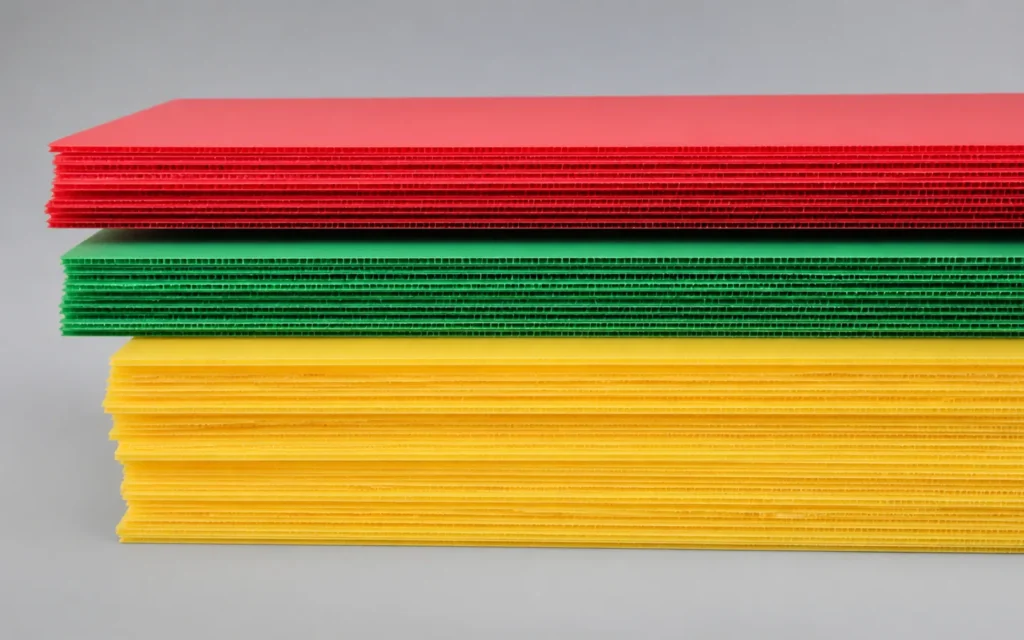
PP hollow sheet, also called twin-wall polypropylene sheet or PP corrugated sheet, has two outer skins connected by internal ribs. It can be cut, creased and converted into packaging such as boxes, partitions, layer pads and protective panels. Youqian Global’s PP hollow sheet product page provides an overview of the material and available project customization.

Corrugated cardboard is a fiber-based board made with fluted paper between liner sheets. It is widely used for shipping cartons and can also be die-cut, printed and combined with dividers or inserts. Board grade, flute profile, liner construction, coatings and box style all affect its performance.

Because both categories include many constructions, a valid comparison must specify the finished packaging design and use conditions.

PP Hollow Sheet vs Cardboard: Buyer Comparison Table

Buyer question PP hollow sheet packaging Corrugated cardboard packaging
What happens around moisture? The polypropylene sheet surface does not absorb water like paper. Open flute edges, seams, closures and the complete box design still need review. Untreated fiber board can lose rigidity after water exposure. Coated or specially designed grades may behave differently.
Can it be used repeatedly? Converted PP packaging may suit repeated handling when the structure, load and return process are designed for it. The number of usable trips is project-specific. Often selected for one-way distribution, although some grades and designs may support limited reuse. Do not assume every cardboard box is single-use.
Can it be cleaned? The sheet surface can generally be wiped, and some finished designs may be washed. Cleaning method, contamination and attached components must be checked. Washing is usually impractical for uncoated cardboard. Coatings may change moisture behavior and end-of-life handling.
Which is stronger? Performance depends on sheet thickness, flute direction, conversion, reinforcement, load distribution and stacking pattern. Performance depends on board grade, flute and liner construction, box design, humidity, load distribution and stacking pattern.
Which is lighter? Compare the weight of the complete box, dividers and hardware at the required performance level. A fiber box may be lighter or heavier depending on its grade and design. There is no universal winner.
Can it be customized? Size, thickness, color, printing and converted features such as handles, closures and dividers can be reviewed for a project. Size, board grade, printing, die-cut features and inserts are also widely customizable.
Is it recyclable? Polypropylene may be recyclable where a suitable local collection and processing route exists. Cleanliness, mixed components and local acceptance matter. Corrugated cardboard commonly has established fiber-recycling routes, but coatings, contamination and local rules can affect acceptance.
Which costs less? The initial unit price may be higher, but a working reuse loop can change cost per trip. Request a project quotation rather than assuming a saving. The initial unit price is often attractive for one-way use, but replacement, damage and handling conditions still affect total cost.

This table is a sourcing framework, not a performance guarantee. A sample or production drawing should be reviewed when packaging must meet a specific load, stack or process requirement.

When PP Hollow Sheet Is Worth Evaluating

Repeated internal or closed-loop handling

PP corrugated boxes can be considered for line-side supply, warehouse movement, parts handling and returnable logistics where empty packaging comes back through a controlled process. The business case depends on whether the package actually returns, remains usable and can be handled efficiently.

The photo below shows a foldable converted panel with creases, fasteners and closure areas. These details—not the sheet alone—determine how operators assemble, collapse and reuse the package.

Blue foldable PP corrugated box panel showing creases and fasteners

Moisture exposure or wipe-down requirements

PP sheet itself does not absorb water like paper, so it may be useful where incidental moisture or routine surface cleaning is expected. However, “water-resistant material” does not automatically mean a finished box is watertight. Open edges, joints, hand holes, lids and fasteners can allow water or debris to enter.

Tell the supplier whether exposure is occasional condensation, outdoor handling, direct spray, immersion risk or a defined cleaning procedure. These are different design conditions.

Custom separation and part presentation

PP hollow sheet can be converted into cell partitions and dividers that locate components inside a box. This may help buyers planning part separation, line-side presentation or repeated loading and unloading. The supplier needs the part dimensions, cell count, divider height, loading orientation and any surface-protection requirement.

Blue PP corrugated box with a fitted cell-divider layout

Explore related PP corrugated box configurations and packaging solutions when the sheet must be converted into a finished system.

When Corrugated Cardboard May Be the More Practical Choice

Cardboard remains a strong candidate when the shipment is dry, one-way and supported by an established fiber-recycling channel. It can also be efficient when high-quality graphics, familiar carton machinery or a standard distribution format matters.

Cardboard may be the more practical starting point when:

  • packaging is not expected to return;
  • storage and transport conditions are controlled and dry;
  • the product does not require repeated wipe-down or washing;
  • the existing packing line is already designed around cartons;
  • local fiber collection is clear and convenient;
  • the project prioritizes a lower one-way package cost over a reusable loop.

This does not mean cardboard is unsuitable for all demanding applications. Board grades, coatings and structural designs vary. Ask the cardboard supplier for data relevant to the actual humidity, load and stack conditions, and compare that proposal with the complete PP packaging design.

How to Compare Cost per Successful Trip

Purchase price alone does not answer whether reusable packaging is economical. Use a simple project model:

Cost per successful trip = (purchase cost + return logistics + cleaning + repair/replacement handling) ÷ completed usable trips

For cardboard, include the carton price, assembly and disposal handling, damage or repacking losses, and the number of completed trips. For PP packaging, include the initial package price, return freight, reverse-logistics labor, cleaning, lost units and damaged replacements.

Run at least three scenarios—conservative, expected and optimistic—using your own operational data. If the route is open and packaging will not return reliably, a theoretical reuse count is not a business case.

Five Comparison Mistakes to Avoid

1. Calling every PP box “waterproof”

The sheet material and the finished package are different things. Review seams, edges, closures and exposure conditions.

2. Assuming cardboard cannot be recycled

Corrugated cardboard commonly enters fiber-recycling systems. Coatings, contamination and local rules can affect acceptance, but a blanket “not recyclable” claim is inaccurate.

3. Treating recyclability as the same as sustainability

End-of-life potential is only one factor. Material use, package life, return mileage, cleaning, damage, loss and actual local recovery all matter.

4. Comparing unit prices without counting trips

A reusable package needs a functioning return loop. A one-way package needs a realistic replacement and handling estimate. Compare cost per completed use under the same operating scope.

5. Asking for a material before defining the job

Start with the product, load, route and handling problem. Then compare structures and samples. A material label cannot replace a packaging specification.

RFQ Checklist for a Useful Material Comparison

Send the following information when asking a supplier to compare PP hollow sheet packaging with your current cardboard format:

  • product or part to be packed;
  • sheet size or internal/external box dimensions, with units;
  • maximum load per box and whether it is distributed or concentrated;
  • current cardboard grade or sample, if available;
  • moisture, dust and cleaning exposure;
  • handling method: manual, trolley, conveyor, pallet or other;
  • planned stacking condition and number of layers;
  • one-way, internal-loop or returnable route;
  • required dividers, handles, closures, printing or labels;
  • estimated quantity for each size or version;
  • destination country and port or city;
  • drawing, photos or sample requirement.

If thickness, structure or color is not yet decided, state the use conditions instead of guessing. The PP hollow sheet specification guide explains how to prepare those details for a supplier review.

Frequently Asked Questions

Is PP hollow sheet better than corrugated cardboard?

Not in every application. PP hollow sheet is worth evaluating for moisture exposure, repeated handling, cleaning or return loops. Corrugated cardboard may be more practical for dry, one-way shipments and established fiber-recycling routes. Compare finished packaging designs under the same conditions.

Is a PP hollow sheet box waterproof?

The polypropylene sheet surface does not absorb water like paper, but the finished box should not be called waterproof without reviewing edges, seams, closures, hand holes and the exposure method. Ask for a design review if water ingress matters.

Is PP hollow sheet recyclable?

Polypropylene may be recyclable where suitable collection and processing are available. Local acceptance, contamination, labels, fasteners and mixed components affect the actual end-of-life route. Confirm the requirements in the destination market.

Which material is cheaper?

Cardboard often has an attractive one-way unit cost, while PP packaging may have a higher initial price. The relevant comparison is cost per successful trip, including return logistics, cleaning, loss, damage and replacement. A project quotation and operating data are required.

Can both PP hollow sheet and cardboard packaging be customized?

Yes. PP projects can be reviewed for sheet size, thickness, color, printing and converted features such as dividers, handles and closures. Cardboard also supports many grades, sizes, print options and die-cut structures. Specify the finished package requirements.

What should I send for a PP packaging quotation?

Send the product, dimensions, maximum load, stack and handling conditions, moisture or cleaning exposure, route type, required accessories, quantity by version and destination. Add a drawing, current box photo or physical sample when fit is critical.

Should I request a sample before changing materials?

A sample is useful when fit, assembly, handling or stacking must be checked. Define what the sample review should verify and do not treat one sample as proof of an untested service-life claim.

Request a Packaging Material Review

Youqian Global supports custom PP hollow sheet and converted PP packaging inquiries for B2B buyers. Send the current packaging format, product dimensions, load, handling route, moisture or cleaning exposure, quantity and destination for a project review.

You can also review Youqian Global’s company information or return to the Youqian Global homepage before sending your RFQ.

Want to Work With Us?

Reach out today and let’s discuss your requirements. We will review the details and follow up with a project-specific quotation.

💬