
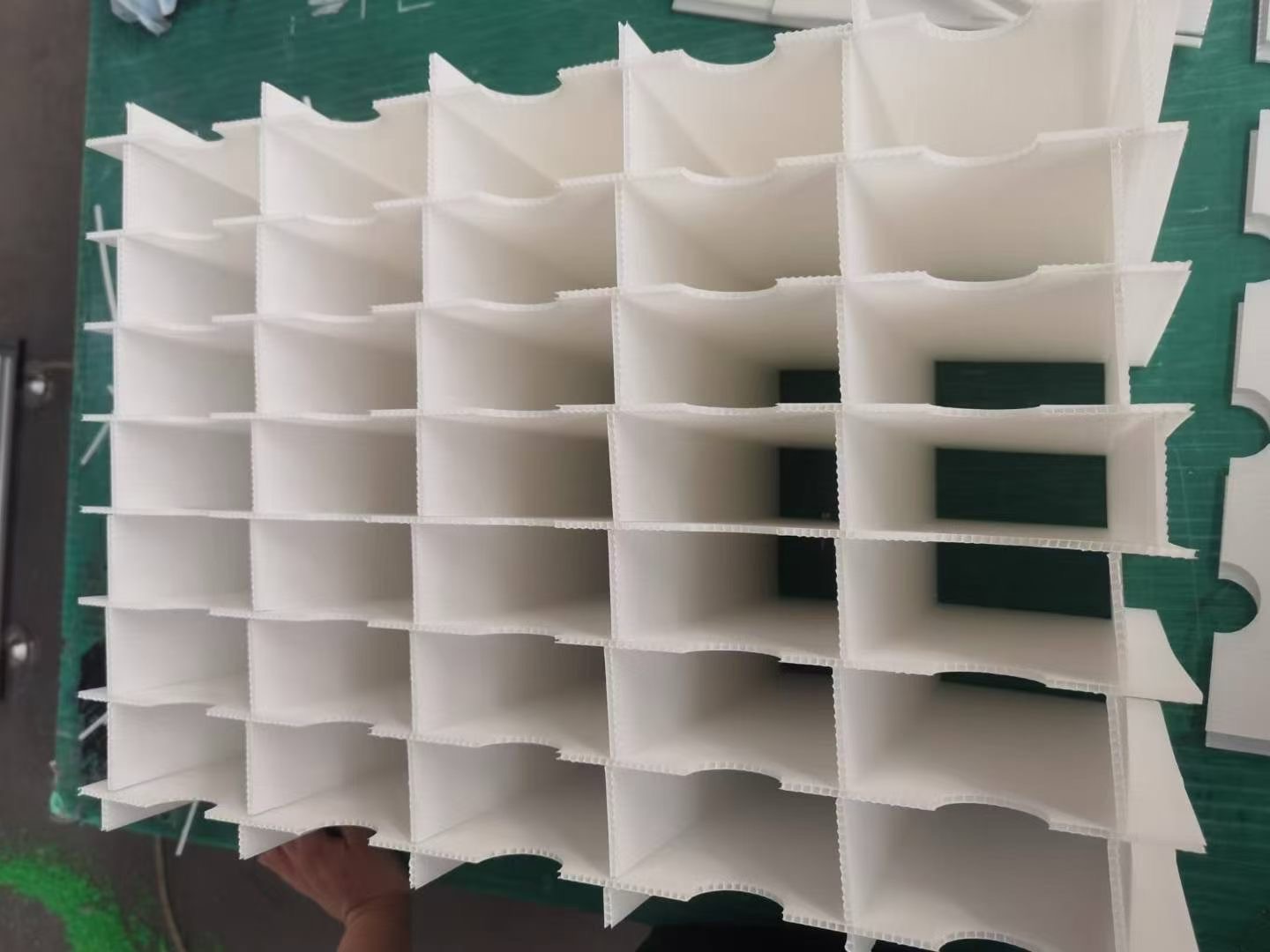
A custom PP corrugated divider is a fitted grid, not a loose accessory. Its geometry must relate the part, the usable space inside the container and the way an operator loads and removes each item. A drawing that shows only the number of cells leaves several important decisions unresolved.
Youqian Global converts PP hollow sheet into plastic dividers for PP corrugated boxes, existing totes, trays and export packs. The first layout should be based on the actual part orientation and container interior rather than a nominal outside box size.
Define the Part Orientation and Usable Container Space
Before laying out rows and columns, identify which face of the part sits down, which direction it is loaded and where hands or tools need access. Then measure the usable container length, width and depth after allowing for wall folds, seams, handles, corner fittings, liners or other hardware that occupies internal space.
- Part evidence: a drawing or representative sample, key dimensions, mass and the surfaces that must not touch.
- Loading orientation: vertical, horizontal or angled placement, plus any required label or inspection face.
- Container interface: usable inside dimensions, internal obstructions and the intended divider support points.
- Operator access: finger clearance, lifting direction and whether a U cutout or another access feature is needed.
- Handling sequence: filling, internal transfer, transport, unloading and return, including whether the grid stays assembled.
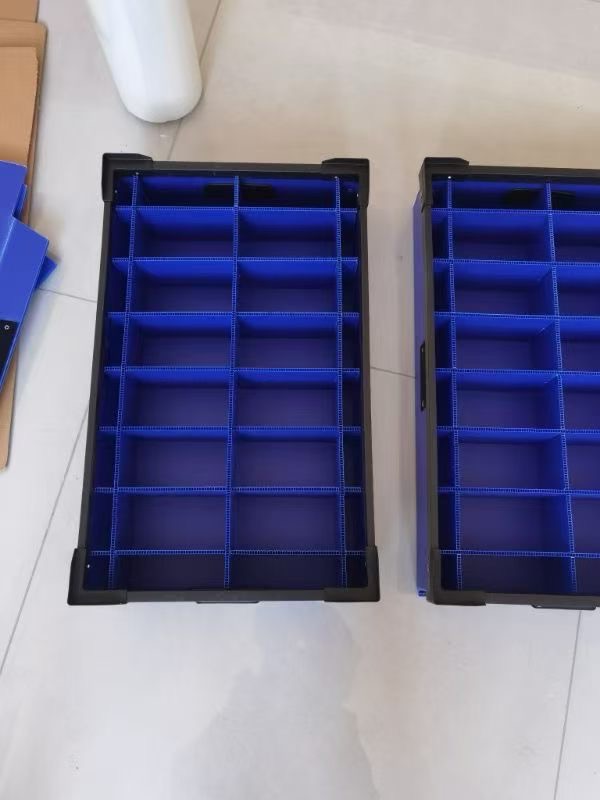
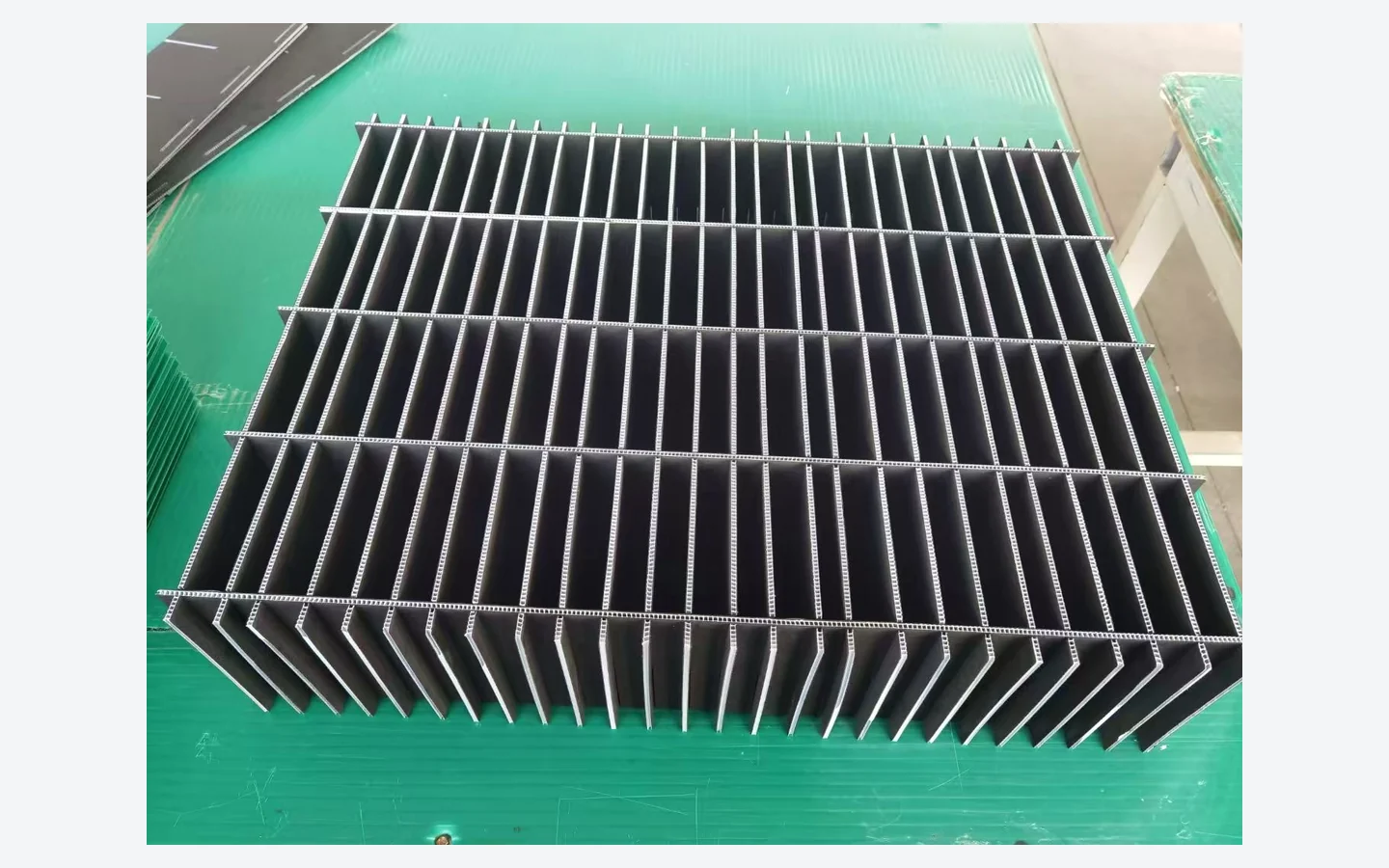
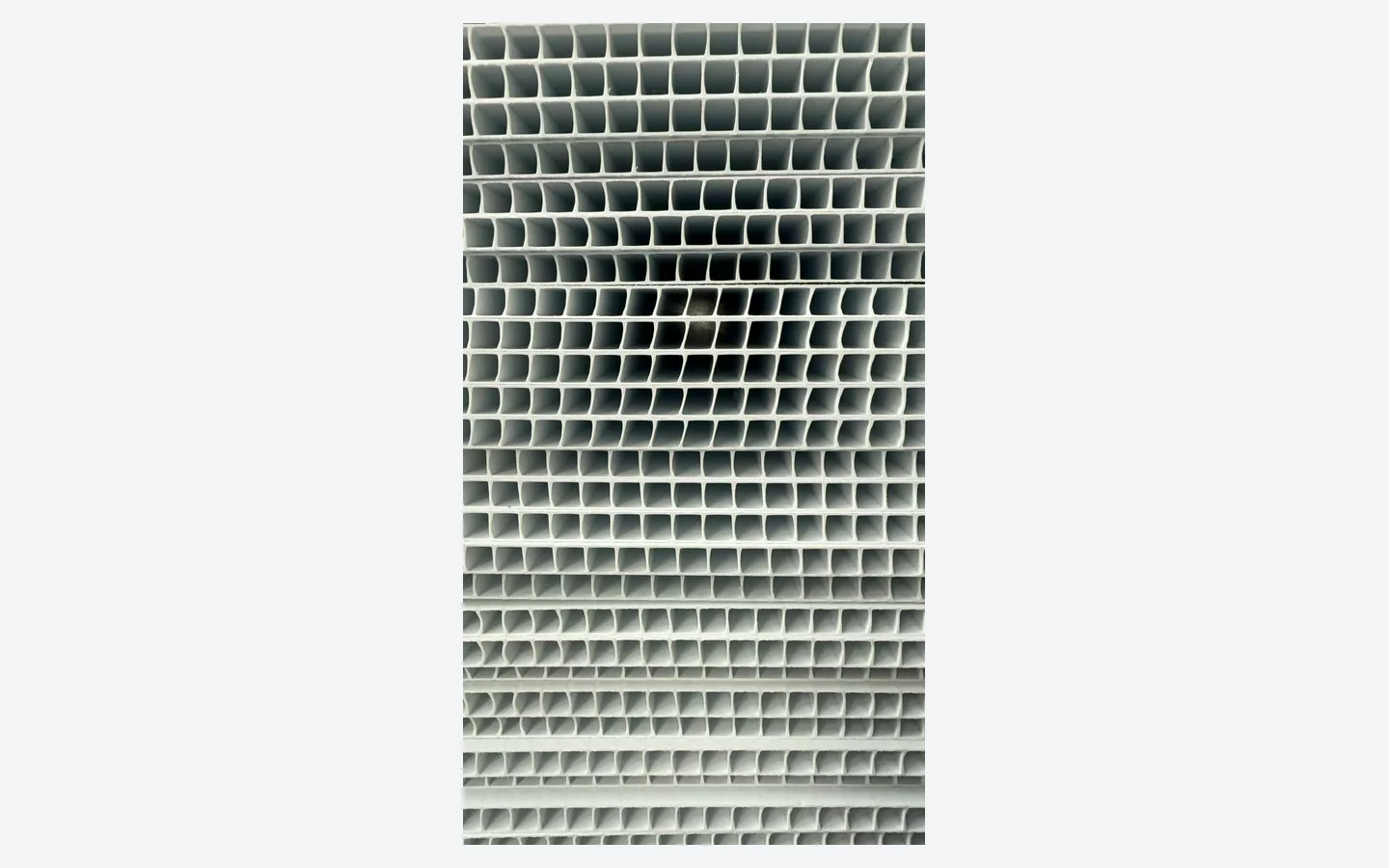
Distinguish Clear Cell Size From Grid Pitch
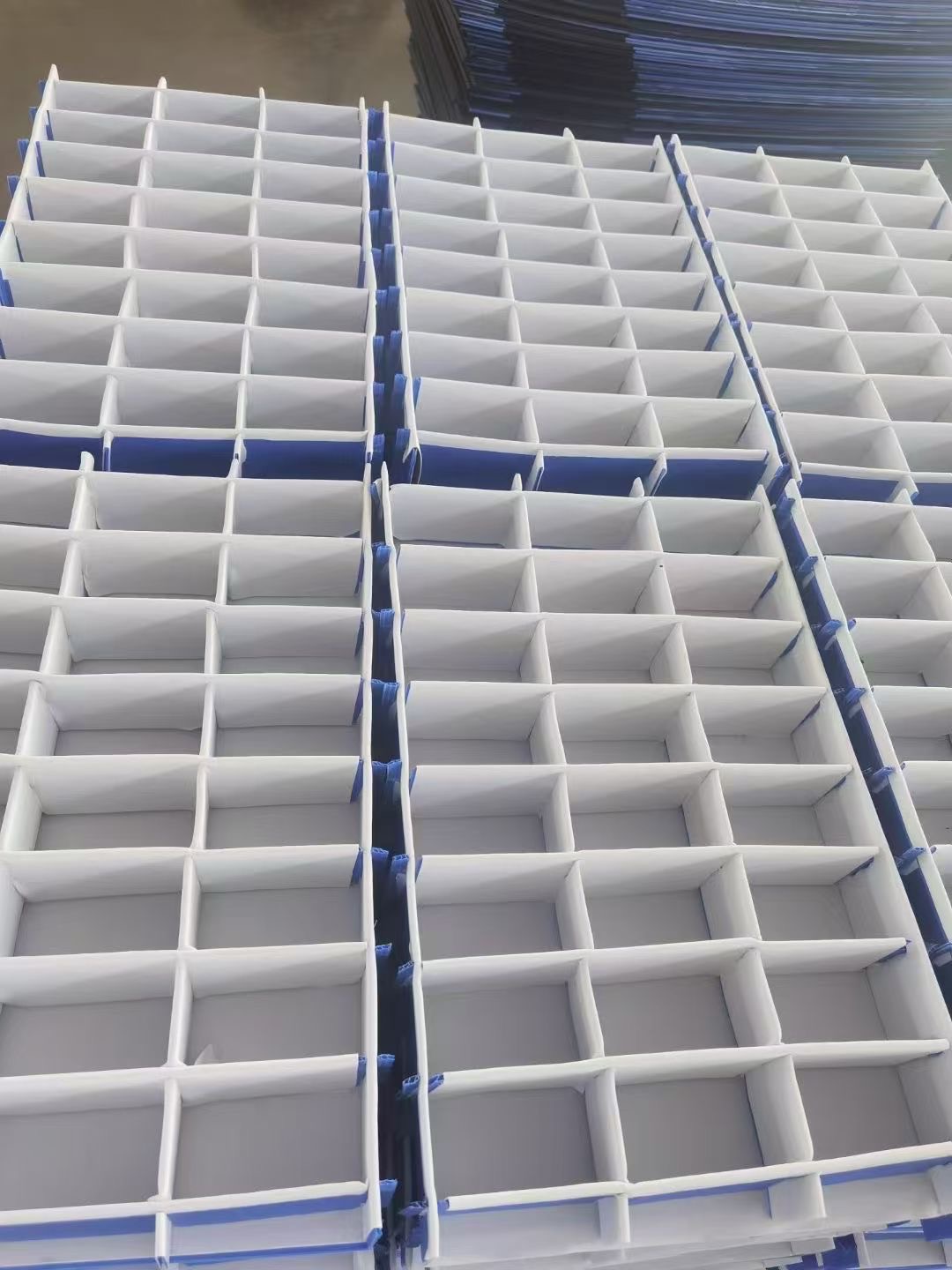
Clear cell size is the open space available to the part; grid pitch also includes the divider material between adjacent cells. Treating those two dimensions as the same can make the finished grid wider or longer than expected. Across several rows, small differences accumulate, so the complete assembled grid must be checked against the usable container interior.
Set Slots, Divider Height and Picking Access Together
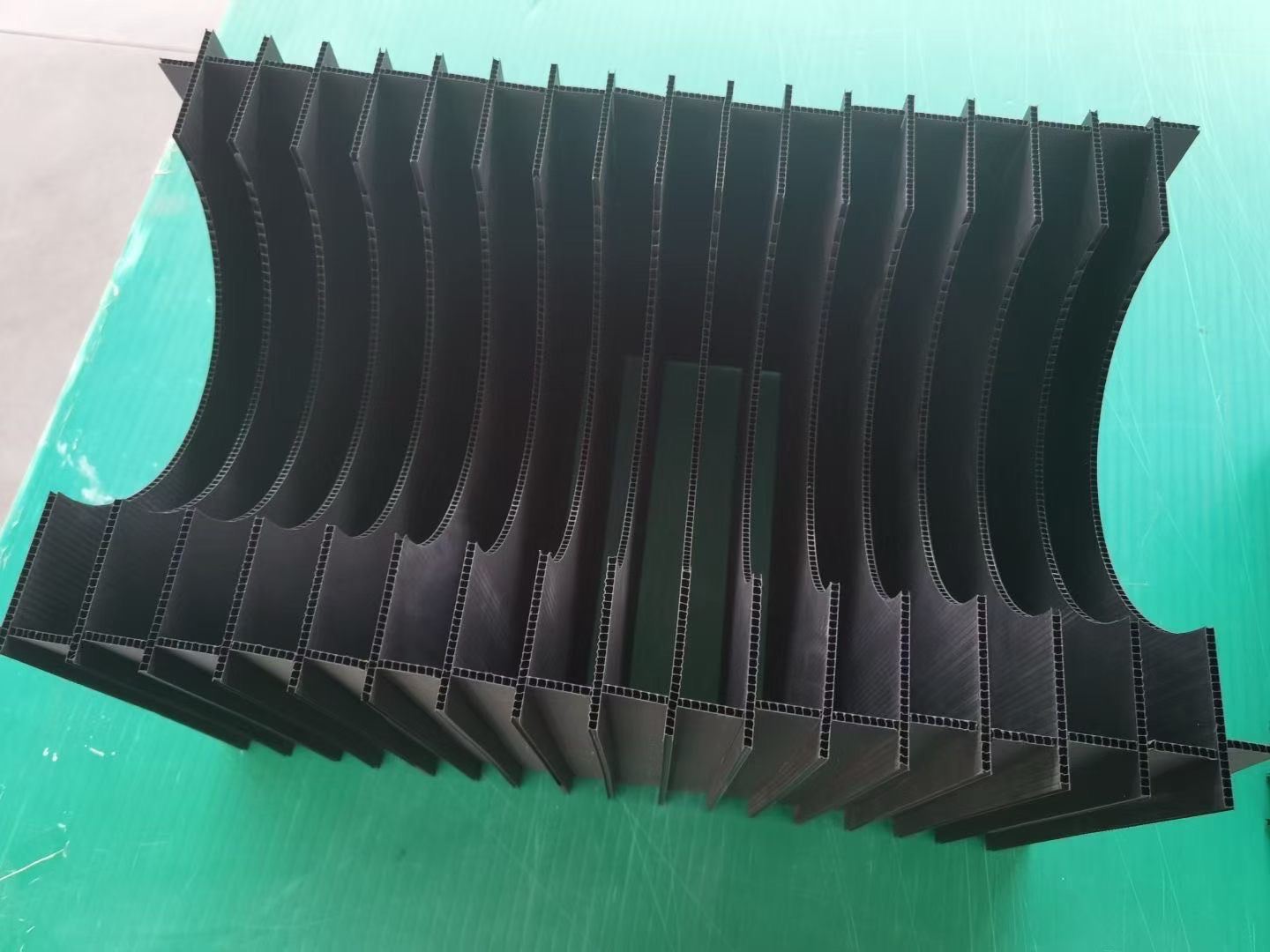
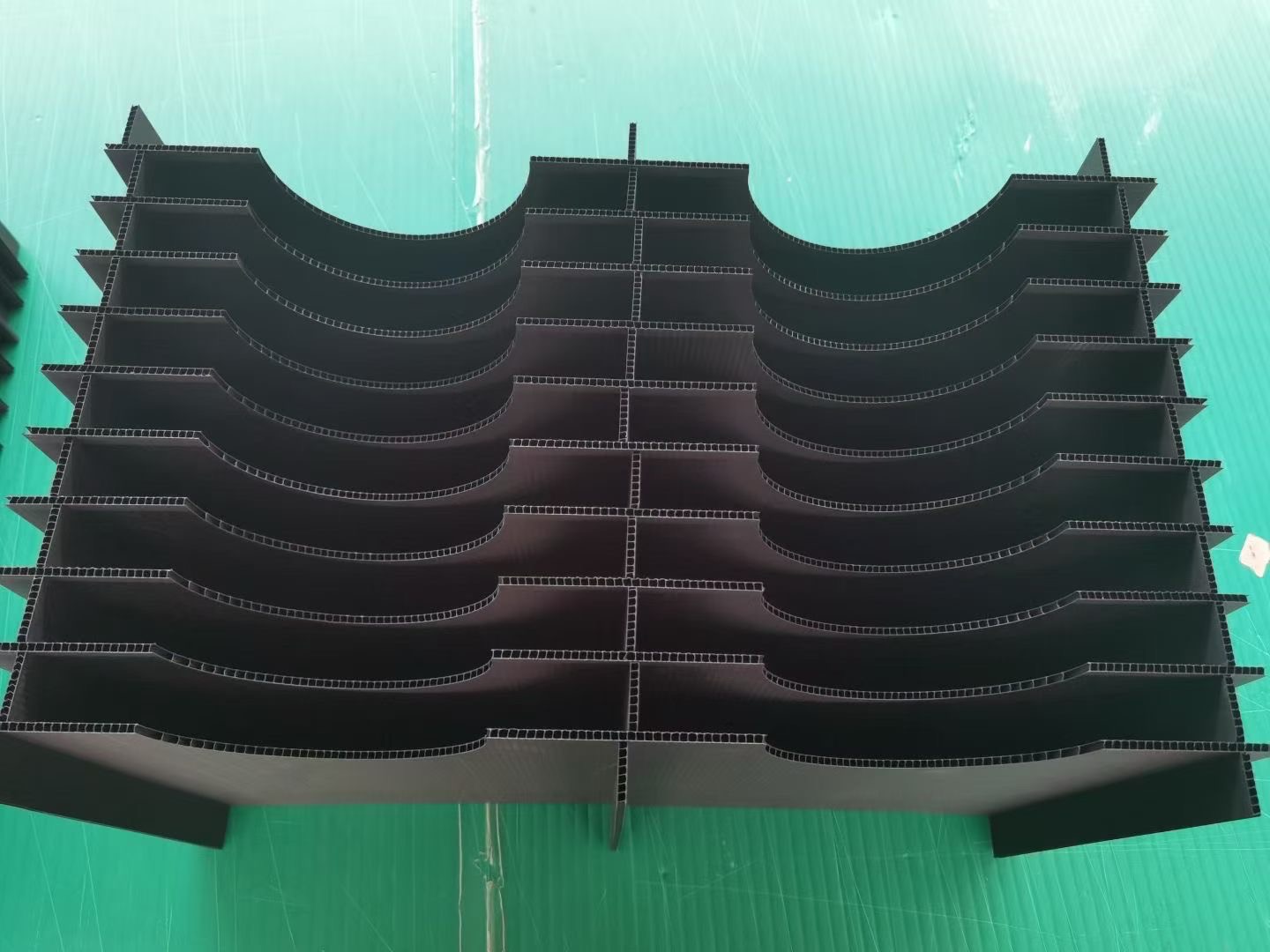
Slot direction, slot depth and material orientation determine how the cross pieces interlock and how the grid is assembled. Divider height should protect the relevant part surfaces without blocking removal. Where operators need finger access, locate U cutouts from the actual picking direction and confirm that the cutout does not expose a protected surface.
Check the Complete Grid Inside the Container
Review the grid as an assembly: accumulated divider thickness, perimeter clearance, corner fit and support at the base all matter. If the outer box can flex, the divider should not rely on an unrealistically rigid interior. Sheet construction and divider height should be selected with the part mass, reuse cycle and support conditions in view, then confirmed by sample rather than assumed from thickness alone.
Validate the Intended Handling Sequence
A first article should be loaded with representative parts and moved through the intended fill, lift, stack, transport and unloading sequence. Check for difficult insertion, trapped fingers, part-to-part contact, grid lift-out and permanent deformation. Any acceptance criteria should be agreed for the real use case; a visual fit check by itself does not validate transport performance.
Prepare a Divider-Specific RFQ
Send the part drawing or sample information, required orientation, usable container dimensions, target cell count, protected surfaces, access needs and handling sequence. Quantity and delivery destination are still needed for commercial and packing planning, but they should follow the geometry and interface data rather than replace it.