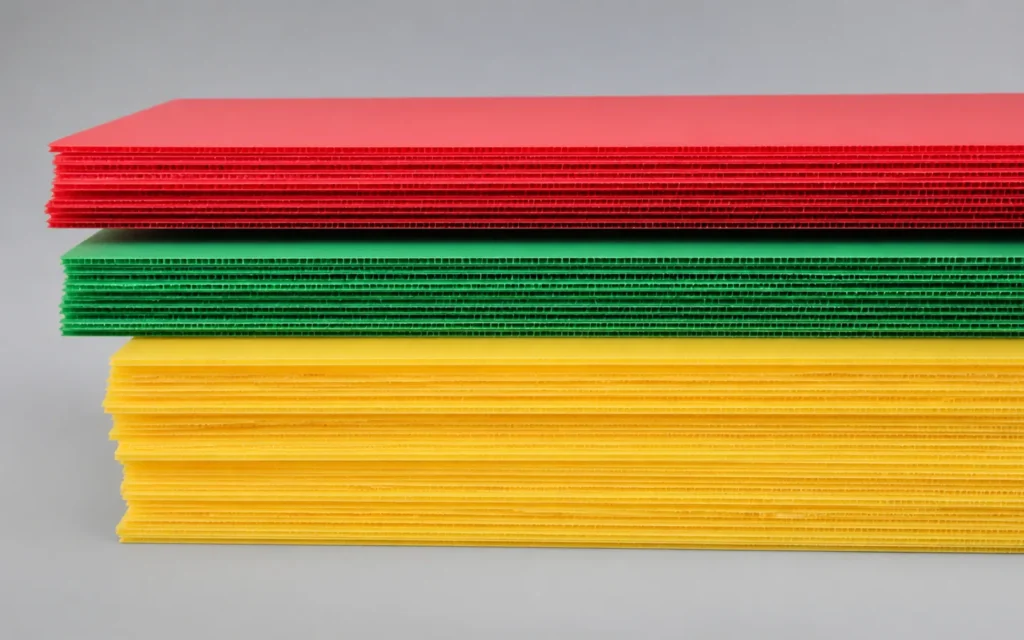
Color is easy to see, but it is not enough to define a PP hollow sheet for an industrial packaging or conversion project. A useful request should also identify the application, required thickness, sheet dimensions, quantity and destination country.
This guide explains what B2B buyers should confirm before asking a PP hollow sheet supplier to review a project. It is intended for purchasers comparing sheet material for reusable packaging, protective layers, dividers, boxes or other converted parts.
What Is a PP Hollow Sheet Specification?
A PP hollow sheet specification is the set of project details used to define the material and format a buyer needs. It normally includes:
- intended application;
- sheet thickness;
- sheet length and width;
- color;
- required quantity;
- cutting, printing or conversion needs;
- packing and destination requirements.
These inputs belong together. Two sheets with the same color may be intended for very different jobs, while two projects using the same thickness may require different sizes, flute directions, cutting plans or packing methods.
1. Start With the Application
The application gives context to every other specification. Tell the supplier whether the sheet will be used as raw material, a protective layer, a divider, a layer pad, a box component or another converted part.
Also explain the handling environment. For example:
- Will the sheet be cut or folded after delivery?
- Will it separate products inside a container?
- Will it be moved repeatedly in a warehouse or returnable loop?
- Will it be stacked, palletized or packed for export?
- Does the surface need printing or labels?
This information does not replace dimensions or quantity. It helps the supplier understand why those specifications matter and which follow-up questions to ask.
2. Confirm the Required Thickness
Thickness is a key material input, but it should not be selected in isolation. The practical choice depends on the intended use, the size of the sheet, the supported or protected item and the way the material will be handled.
If your engineering drawing already defines a thickness, include it in millimetres. If it does not, provide the application and load or handling conditions instead of guessing. For a divider or converted packaging structure, share the product weight and the planned cell or box layout as well.
Avoid requesting “the strongest sheet” without describing the job. A thicker material is not automatically the most appropriate or efficient format for every application.
3. Specify Sheet Length and Width
Write the sheet size as length × width, with the unit clearly stated. Use millimetres or another agreed unit consistently across the drawing, inquiry and purchase documents.
Sheet dimensions affect cutting, conversion, packing and transport planning. Buyers should clarify whether they need:
- full sheets;
- cut-to-size blanks;
- finished converted parts;
- a particular flute direction;
- dimensional tolerances shown on a drawing.
If several sizes are required, list the quantity for each size separately. This is clearer than sending one total quantity for a mixed order.
4. Treat Color as a Functional Project Input
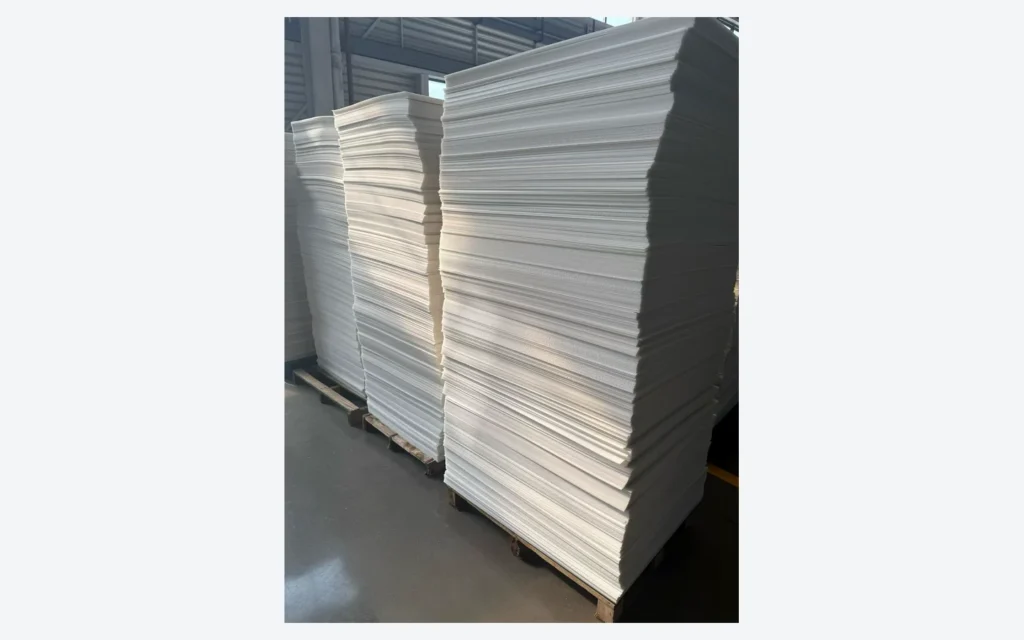
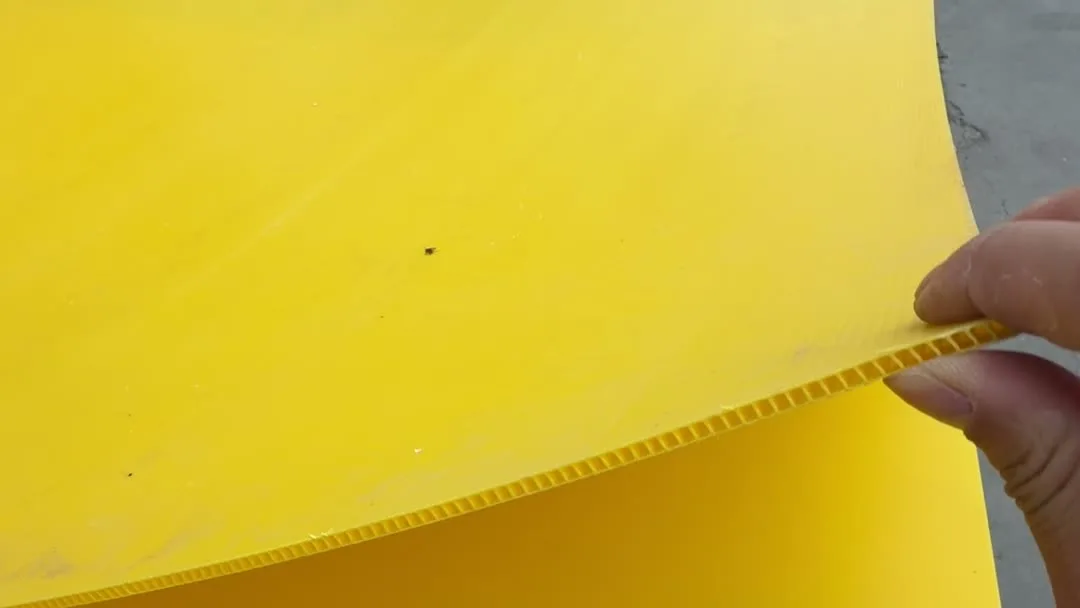
Color can support product identification, warehouse zoning, branding or visual separation between parts. The latest Youqian Global material shows both yellow sheets under handling and stacks of blue converted sheet parts. The images demonstrate that color is visible and commercially relevant, but they do not by themselves define the complete material specification.
State the required color and, where relevant, provide a controlled reference approved by your team. Do not assume that a color name alone communicates an exact shade. If color is optional, say so; this can make the project review more efficient.

5. Give a Realistic Quantity
Quantity helps the supplier understand the production and packing scope. State the estimated number of sheets or converted pieces and distinguish between:
- sample or evaluation quantity;
- first production order;
- expected repeat demand, if known.
For multiple colors, sizes or printed versions, split the quantity by variant. This reduces ambiguity and makes the quotation easier to compare internally.
6. Add Conversion and Packing Requirements
Raw sheets and finished packaging parts require different project reviews. Tell the supplier if the material needs cutting, creasing, folding, printing, slots, holes, dividers or other conversion work.
For export planning, include the destination country and any known pallet, carton or container constraints. If the sheets will enter an existing packaging line or returnable system, provide the relevant drawing or packing layout.
Do not wait until after the price discussion to mention these requirements. Conversion and export packing can change how the order needs to be prepared.
PP Hollow Sheet RFQ Checklist
| Information | What to send |
|---|---|
| Application | What the sheet or converted part will do |
| Thickness | Required thickness in mm, or handling/load context if undecided |
| Sheet size | Length × width with units |
| Color | Required color or approved reference; state if flexible |
| Quantity | Sheets or pieces, separated by size/color where needed |
| Conversion | Cutting, printing, folding, holes, slots, dividers or finished parts |
| Packing | Pallet, carton or other known packing constraints |
| Destination | Country and, when useful, destination port |
| Reference files | Drawing, photo or packing layout if available |
Common Specification Mistakes
Sending only a photo or color
A photo can show the general product family, but it cannot reliably communicate thickness, dimensions, quantity or working conditions.
Mixing units
Use one measurement system consistently and label every dimension. Unlabelled numbers create avoidable quotation delays.
Giving one quantity for several variants
Separate quantities by size, color and converted format so each item can be reviewed correctly.
Leaving the application unexplained
An application description helps connect the requested material to handling, protection and conversion needs.
Frequently Asked Questions
What information is needed for a PP hollow sheet quotation?
Send the application, thickness, sheet size, color, quantity, conversion or printing needs, packing requirements and destination country. Attach a drawing or reference photo when available.
Is color enough to identify a PP hollow sheet?
No. Color is one visible specification, but buyers should also define the application, thickness, length, width, quantity and any conversion or packing requirements.
How should PP hollow sheet size be written?
Write the dimensions as length by width and include the unit. If several sizes are needed, list the required quantity for each size.
What if the required thickness is not yet known?
Describe the application, supported or protected product, handling method, sheet size and any stacking or conversion requirements. This gives the supplier a better basis for asking the right technical questions.
Should the destination country be included in the inquiry?
Yes. The destination helps frame export packing and shipping discussions, especially when pallet or container constraints are relevant.
For related product information, see PP hollow sheet and twin wall polypropylene sheet.